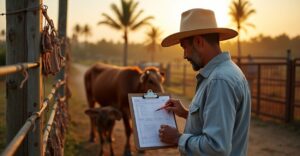
Green loans are financing products designed to support sustainable agricultural practices and investments in climate-resilient farm equipment. They matter because they channel capital to farmers and ranchers adopting regenerative methods, lowering climate risks and improving productivity. To start, identify eligible practices and financing options that match your operation’s scale and sustainability goals.
Small agribusinesses often struggle to access tailored credit on favorable terms; Empréstimos Verdes (green loans) offer interest rates, maturities, and conditions structured to support ecological transition. By bridging technical assistance, longer repayment horizons, and performance-based incentives, these loans reduce barriers to adopting renewable energy, water-saving irrigation, and soil-restoring practices.
This article explains how Empréstimos Verdes work, highlights seven practical lender types and programs, compares terms and eligibility, and offers actionable tips for small producers seeking sustainable finance. You’ll find tables, checklists, and a focused FAQ to guide next steps.
Green Loan Basics and Benefits (Empréstimos Verdes Overview)
What Empréstimos Verdes finance and why it matters
Empréstimos Verdes typically fund on-farm investments such as solar pumps, efficient irrigation systems, agroforestry, and climate-resilient machinery. These investments reduce greenhouse gas emissions, improve water management, and bolster long-term yields, aligning financial returns with environmental outcomes.
By tying capital to sustainability goals, green loans lower operational risk from extreme weather and input volatility. Lenders increasingly view projects with measurable environmental benefits as less risky, often offering competitive pricing or technical support.
Assess projects by expected energy savings, soil health improvement, or biodiversity benefits to demonstrate impact. Many programs require basic monitoring metrics, so prepare simple baseline data to access better terms or incentives.
Common structures and repayment models
Green loans can be structured as term loans, equipment finance, lines of credit, or performance-linked lending. Repayment schedules are often aligned with project cash flows—longer tenors for infrastructure and seasonal grace periods for crop cycles. This flexibility helps small agribusinesses match payments to revenue timing.
Some lenders offer interest rate discounts tied to verified environmental outcomes or certification milestones. Other models include combined financing with grants or technical assistance to lower upfront costs and risk for farmers adopting regenerative practices.
Understanding amortization, collateral requirements, and any covenants tied to environmental performance is essential before committing. Negotiate technical support or verification assistance as part of the loan package when possible.
Key eligibility criteria and documentation
Eligibility often hinges on proven farm income, a feasible business plan, and clear technical specifications for the financed equipment or practice. Lenders may request production records, land titles, and environmental management plans. For smallholders, group lending or cooperative guarantees can substitute for formal collateral.
Applicants should prepare project cost estimates, savings projections (energy, water), and basic monitoring plans. Certifications such as sustainability labels or participation in extension programs can improve approval odds and unlock better rates.
Digital records, weather and yield history, and supplier quotes speed up processing. Engage agronomists or technical assistance providers early to build a credible application demonstrating both financial viability and environmental impact.
Many commercial banks now offer designated green credit lines for agriculture with preferential rates for renewable energy and water-efficiency projects. These programs usually require technical validation and may be supported by public guarantees or multilateral funding to reduce lender risk.
Preferential interest rates for verified sustainability projects
Longer maturities aligned with equipment lifespan
Structured repayment tied to harvest cycles
Optional technical assistance and monitoring support
Local bank programs are attractive due to proximity and relationship banking. Small agribusinesses should inquire about eligibility, document requirements, and any bundled advisory services that accompany the loan.
Cooperatives often provide member-focused green financing or group facilitation for access to grants and low-cost loans. Because credit risk is shared and operations aggregated, cooperatives can negotiate better terms and provide in-house technical training on sustainable practices.
Members benefit from economies of scale when procuring solar systems, drip irrigation kits, or soil amendments. Cooperatives may also offer inventory or warehouse receipt financing, reducing liquidity constraints during transitions to regenerative methods.
Evaluate the cooperative’s governance, financial health, and the availability of technical support before relying solely on this channel for funding major investments.
Microfinance and community lenders
Microfinance institutions and community development lenders provide accessible, smaller-value green loans for inputs, small equipment, and working capital tailored to smallholders. These lenders emphasize flexible terms, local presence, and capacity building, often accepting nontraditional collateral.
Programs may incorporate social and environmental clauses encouraging conservation agriculture, tree planting, or integrated crop-livestock systems. The trade-off can be shorter tenors and slightly higher rates, balanced by stronger outreach and tailored support.
Microfinance is best for incremental investments and pilot projects that demonstrate benefits before scaling to larger, longer-term green loans from banks or development programs.
Public and Development Programs (Green Loans from Institutions)
Government-backed sustainable credit programs
Many governments run green credit lines or subsidy programs to accelerate climate-smart agriculture. These may include interest subsidies, partial credit guarantees, or direct low-cost loans for renewable energy, efficient irrigation, and conservation measures.
Interest rate subsidies or fee waivers
Partial loan guarantees to reduce collateral needs
Grant co-financing for feasibility studies
Priority access for small and vulnerable producers
Integration with extension services and technical training
Contact local agricultural agencies to learn about eligibility, application cycles, and required documentation. Combining government support with commercial lending often yields the best overall financing package.
Multilateral and development bank funding
International development banks (e.g., World Bank, regional development banks) fund large-scale programs that trickle down as concessional loans or credit lines through local intermediaries. These funds prioritize measurable climate impact and capacity building for small farmers.
Programs often include technical assistance, monitoring frameworks, and support for establishing supply chains for sustainable inputs. Access typically requires partnering with an accredited implementing bank or agency.
Explore multilateral programs via national implementing partners; these can reduce effective interest rates and provide nonfinancial support crucial for successful adoption.
Grant-funded blended finance vehicles
Blended finance combines grants with concessional debt to de-risk private investment in green agriculture. Grants fund project preparation, technical assistance, or outcome-based incentives while loans finance capital expenditures with better pricing.
Blended structures are valuable for first-of-its-kind projects or for scaling models that need demonstration before mainstream lenders commit. They can lower the effective cost for farmers and absorb initial performance risk.
Seek partnerships with NGOs or development programs that coordinate blended finance opportunities and can help package credible applications for small agribusinesses.
Anúncios
Private Sector Lenders and Impact Investors (Green Credit Providers)
Impact investment funds and sustainable lenders
Impact investors and specialized sustainable finance firms offer flexible capital for scalable projects that deliver measurable social and environmental benefits. Their lending often focuses on aggregation models, supply-chain interventions, and climate-smart technologies.
These lenders emphasize robust monitoring, outcomes-based contracts, and technical partnerships. Interest in carbon sequestering practices, regenerative agriculture, and energy transition projects is increasing among impact portfolios.
Prepare clear impact metrics and scalable business plans to attract interest. Impact lenders may accept lower financial returns in exchange for strong environmental performance and scalability potential.
Agritech financiers and equipment-as-a-service models
Agritech companies and equipment financiers offer pay-as-you-go or lease-to-own solutions for solar pumps, precision irrigation, and sensor systems. These models reduce upfront capital needs and align payments with operational benefits.
Service-based financing often includes installation, maintenance, and data services that improve system performance and project returns. This reduces technical barriers and makes green technologies accessible to smaller producers.
Evaluate total cost of ownership versus outright purchase, factoring in reliability, warranty, and technical support available locally to ensure sustainability of operations.
Off-takers and value-chain financing
Buyers and processors may provide pre-financing or input credit tied to sustainable sourcing commitments. In these arrangements, off-takers fund production changes that improve product quality or environmental footprint, repaid through future deliveries.
Value-chain financing leverages contractual demand to reduce market risk and improve access to favorable terms. It often pairs with certification or verification to ensure traceability and market premiums for sustainable outputs.
Negotiate clear terms on pricing, volumes, and verification requirements to avoid supply-side surprises and ensure mutually beneficial arrangements for small producers.
Risk Management and Monitoring (Sustainability Performance)
Measuring outcomes and reporting requirements
Many Empréstimos Verdes require monitoring of metrics like energy saved, water reduced, emissions avoided, or soil organic carbon changes. Lenders may ask for baseline and periodic reports to verify performance and trigger incentives.
Metric
Typical Measurement
Purpose
Energy use
kWh saved via meters or estimates
Validate solar/efficiency impact
Water use
Irrigation volume, sensor data
Assess irrigation efficiency
Soil health
Soil organic carbon tests
Track carbon sequestration
Use affordable monitoring tools—meters, simple soil tests, and mobile data collection—to meet lender requirements. Accurate reporting unlocks performance-based rate reductions and builds credibility for future financing.
Managing financial and environmental risk
Risk mitigation includes crop diversification, insurance, reserve funds, and staggered investments to avoid cash-flow shocks. Environmental risk management also covers drought contingency plans and adaptive management to changing weather patterns.
Consider partial guarantees, off-taker contracts, and technical assistance components to reduce lender risk and improve credit terms. Insurance products, like index-based weather insurance, can be paired with green loans to stabilize incomes.
Engage extension services or agronomists to design resilient cropping systems and document projected returns under different climate scenarios for lender reassurance.
Verification, certification, and impact verification
Independent verification or third-party certification (e.g., sustainability seals, carbon standards) strengthens borrower profiles and can unlock premium financing. Verification establishes credibility for claimed environmental benefits and supports access to green capital markets.
Lenders may accept low-cost local verifier reports for small projects, while larger investments might require international standards. Factor verification costs into project budgets and seek grant support where available.
Transparent data practices and consistent reporting create a track record that simplifies future financing and enhances negotiation power with lenders and buyers.
Practical Steps to Access Empréstimos Verdes (How to Apply)
Preparing a strong application and business case
Assemble a clear project plan with scope, timeline, cost estimates, and expected savings or revenue impacts. Include technical specifications from suppliers and basic financial projections showing repayment capacity. Demonstrating both environmental and economic benefits makes applications more compelling.
Project description and technical specs
Cost and savings estimates
Proof of land tenure or cooperative membership
Engage a local agronomist or technical advisor to validate assumptions and help present a credible, bankable plan tailored to the lender’s criteria.
Negotiating terms and securing support services
Negotiate interest rates, covenants, grace periods, and any performance-based clauses. Ask for bundled technical assistance, supplier guarantees, or maintenance contracts that protect your investment and make repayment more certain.
Seek partial guarantees from public programs or development agencies to reduce collateral needs. Emphasize traceability, expected impacts, and concrete monitoring plans when discussing terms with lenders.
Where possible, secure written commitments for training and after-sales support, as these services materially affect the long-term success of financed green technologies.
Leveraging partnerships and co-financing
Combine sources—microloans, cooperative financing, and government subsidies—to create a blended package that lowers upfront costs and distributes risk. Partnerships with NGOs, buyers, and suppliers can provide additional resources and market access.
Financing Source
Typical Role
Government subsidy
Reduce upfront cost
Commercial bank
Provide term loan
Impact fund
Offer concessional capital
Well-structured co-financing can lower overall financing costs and expand eligibility. Document each partner’s role and disbursement triggers clearly to avoid delays during implementation.
Financing Case Studies and Lender Examples (Who Provides Green Loans)
Local bank program: structured green credit example
A regional bank launched a green agriculture line offering lower interest rates for solar irrigation and efficient machinery, backed by a government guarantee. Technical support was part of the package, improving adoption rates and reducing nonperforming loans.
The program required a technical feasibility report and simple monitoring of energy and water use. Farmers benefited from longer tenors and seasonal grace periods aligned with harvest cycles.
Outcomes included improved yields and reduced diesel costs. This model demonstrates how public-private partnerships can scale Empréstimos Verdes while protecting lender portfolios and farmer livelihoods.
Cooperative-led financing model
A producer cooperative pooled demand to secure bulk financing for drip irrigation systems, offering individual members affordable repayment plans through payroll or collective revenue streams. The cooperative coordinated installation, training, and monitoring.
This approach reduced procurement costs and simplified loan administration for lenders. Members saw quick improvements in water efficiency and crop quality, enabling faster repayment and easier access to additional credit.
Cooperative credibility and aggregated cash flows attracted favorable terms from a partner bank and allowed smallholders without formal collateral to access significant capital.
Impact fund partnership example
An impact investor partnered with an agritech company to finance solar-powered cold storage for smallholder vegetables. The financing combined concessional capital, off-taker contracts, and technical support, sharing risk across stakeholders.
The project improved post-harvest incomes and reduced food waste, with repayments tied to storage fees and buy-back agreements. Independent verification tracked carbon savings and income gains for impact reporting.
This case highlights how blended finance and value-chain alignment unlock investments that might be too risky for traditional lenders alone.
Conclusion and Next Steps for Small Agribusinesses
Empréstimos Verdes connect capital to sustainable agricultural transitions by offering tailored terms, technical support, and outcome-based incentives. Small agribusinesses benefit from reduced operational risk, improved productivity, and access to markets that value sustainable produce.
Start by assessing priority investments, assembling clear project documentation, and exploring blended financing options with banks, cooperatives, and development programs. Apply for Empréstimos Verdes with a measurable plan and seek partnerships that provide technical assistance and verification to strengthen your case.
Frequently Asked Questions (FAQ)
What are Empréstimos Verdes and who can apply?
Empréstimos Verdes are loans for sustainable agricultural investments. Smallholders, cooperatives, and agribusinesses can apply if they present feasible projects, basic documentation, and often some evidence of tenure or income.
Which projects typically qualify for green loans?
Qualifying projects include solar pumps, efficient irrigation, agroforestry, regenerative soil practices, and climate-resilient equipment. Lenders look for clear environmental and financial benefits.
Do Empréstimos Verdes require special collateral?
Collateral requirements vary; some programs accept group guarantees, equipment liens, or partial guarantees from government or development agencies to reduce borrower collateral burden.
How do performance-based incentives work?
Lenders may reduce rates or offer rebates if monitored metrics show energy savings, water reduction, or emissions avoidance, based on agreed verification schedules and targets.
Where can I find trustworthy programs and lenders?
Start with local agricultural agencies, cooperative offices, and regional development banks. Also consult impact funds and agritech providers that offer bundled financing and technical support.
Edvânia Almeida. Formada em Ciências Contábeis e Pós-graduada em Gestão Financeira: Auditoria e Controladoria pela FGV. Pequena pecuarista e apaixonada pelo Agronegócio e Gestão Estratégica.
Para fornecer as melhores experiências, usamos tecnologias como cookies para armazenar e/ou acessar informações do dispositivo. O consentimento para essas tecnologias nos permitirá processar dados como comportamento de navegação ou IDs exclusivos neste site. Não consentir ou retirar o consentimento pode afetar negativamente certos recursos e funções.
Funcional
Sempre ativo
O armazenamento ou acesso técnico é estritamente necessário para a finalidade legítima de permitir a utilização de um serviço específico explicitamente solicitado pelo assinante ou utilizador, ou com a finalidade exclusiva de efetuar a transmissão de uma comunicação através de uma rede de comunicações eletrónicas.
Preferências
O armazenamento ou acesso técnico é necessário para o propósito legítimo de armazenar preferências que não são solicitadas pelo assinante ou usuário.
Estatísticas
O armazenamento ou acesso técnico que é usado exclusivamente para fins estatísticos.O armazenamento técnico ou acesso que é usado exclusivamente para fins estatísticos anônimos. Sem uma intimação, conformidade voluntária por parte de seu provedor de serviços de Internet ou registros adicionais de terceiros, as informações armazenadas ou recuperadas apenas para esse fim geralmente não podem ser usadas para identificá-lo.
Marketing
O armazenamento ou acesso técnico é necessário para criar perfis de usuário para enviar publicidade ou para rastrear o usuário em um site ou em vários sites para fins de marketing semelhantes.
 Ir para o conteúdo