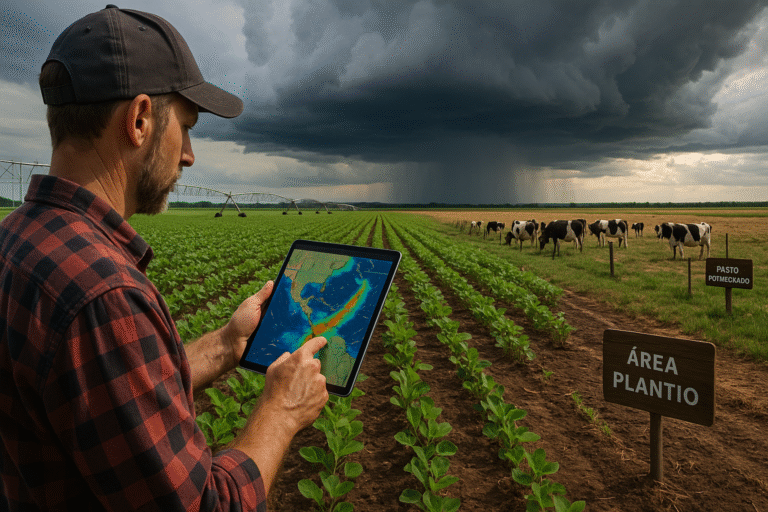
Climate Insurance is a financial tool that shifts weather-related risks to insurers or reinsurance markets. It protects farmers, ranchers, and agribusiness investors from losses caused by droughts, floods, storms, and other extreme events. Understanding what it is, why it matters, and how to access it helps producers stabilize revenue and attract investment.
In agribusiness, Seguro Climático reduces uncertainty, improves bankability, and reshapes credit terms, collateral needs, and subsidy eligibility. New parametric products, blended finance, and public-private partnerships are changing how lenders and producers manage risk. This article explains these shifts and offers practical guidance to adapt financing strategies.
What follows covers practical definitions, policy implications, product types, and step-by-step actions for producers, lenders, and policymakers to use Seguro Climático effectively in the agribusiness value chain.
Meta description (reference): Climate Insurance (Seguro Climático) protects agribusiness from weather risks, improving access to credit and reducing financial uncertainty.
Climate risk coverage, commonly called Seguro Climático in Portuguese-speaking markets, is designed to transfer weather-related losses from producers to insurers. It can be indemnity-based, covering actual losses, or parametric, paying when predefined triggers occur. For agribusiness, this distinction affects speed of payout, basis risk, and administrative complexity.
Parametric solutions use measurable indices—rainfall, temperature, NDVI—to trigger payouts automatically, which reduces claims disputes and speeds liquidity after an event. Indemnity products require field verification, which can be more precise but slower and costlier to administer, affecting smallholder access and transaction costs.
Adoption of climate risk coverage reduces income volatility for farms and ranches, making them more attractive to creditors and investors. When combined with risk management and resilient agronomy, these schemes increase long-term productivity and creditworthiness.
How products fit agribusiness financing
Seguro Climático products interact with loans, input financing, and investment structures by lowering downside risk. Lenders often adjust interest rates, loan tenors, and required collateral when a borrower holds adequate climate coverage. This rebalancing can unlock longer-term capital for equipment, irrigation, or herd improvements.
Insurance can also be embedded in credit lines or bundled with inputs, creating pay-as-you-go structures that are easier for smallholders to adopt. Public subsidies for premiums frequently catalyze market uptake, but sustainable models need scale and private participation to reduce fiscal burden.
For financiers, insured portfolios show lower probability of default during extreme events, improving portfolio performance metrics. This creates opportunities for securitization and risk transfer to capital markets through catastrophe bonds or other instruments.
Key stakeholders and their incentives
Main stakeholders include producers, agribusiness lenders, insurers, reinsurers, governments, and donors. Producers seek predictable cash flow and income protection. Lenders seek collateral-efficient structures and reduced non-performing loans. Insurers need sufficient actuarial data to price risk accurately.
Governments and donors often subsidize premiums or catalyze index design, aiming to protect food security and rural livelihoods. Reinsurers and capital markets enable scalability by absorbing peak losses and offering diversification benefits across geographies and perils.
Successful programs align incentives: they make coverage affordable for farmers, viable for insurers, and cost-effective for public budgets, while improving lender confidence and enabling productive investments.
Parametric climate insurance uses predefined triggers—rainfall thresholds, temperature averages, or satellite vegetation indices—that automatically initiate payouts. These triggers eliminate lengthy claims processing and provide fast liquidity to producers after an extreme event. The transparency of triggers also reduces disputes and administrative costs.
Using objective data sources increases scalability and enables remote monitoring across large territories. Parametric designs must balance accuracy and basis risk: tighter triggers reduce basis risk but can increase costs or reduce payouts for some producers. Public-private collaboration helps calibrate triggers to local agronomic realities.
Adoption improves resilience by ensuring timely cash for replanting, feed purchases, or debt servicing. Faster payouts preserve working capital and reduce distress sales of assets, stabilizing farm finances and community economies.
Typical product structures and payout mechanisms
Parametric products often feature a trigger, payout curve, and cap. The trigger specifies the index threshold—e.g., less than 60 mm of seasonal rainfall—while the payout curve defines compensation relative to index deviation. Caps limit insurer exposure and control premium pricing. Premiums can be paid seasonally or bundled into input loans.
Payouts are automated and transferred directly to bank accounts, mobile wallets, or input suppliers. This speed supports immediate recovery actions, such as buying seed, fertilizer, or animal feed. Payout design should consider local financial inclusion levels to ensure recipients can effectively receive and use funds.
Partnerships with fintechs and input suppliers enable conditional payouts or vouchers, channeling funds to production needs while maintaining producer autonomy. Proper communication on triggers and expected behavior following payout is critical to trust and uptake.
Accessible payment channels (banking, mobile money)
Educational outreach on basis risk and coverage limits
Integration options with credit and input suppliers
When evaluating parametric products, agribusinesses should ensure triggers reflect local cropping calendars, that data sources are reliable, and that payout logistics match rural infrastructure constraints. Technical assistance helps producers interpret index behavior relative to on-farm conditions.
Innovations include hybrid indemnity-parametric policies, microinsurance for smallholders, index-based livestock cover, and weather derivatives for larger value chains. These designs tailor payouts to crop cycles, pasture conditions, and specific supply-chain risks, widening applicability across commodities.
Product innovation is driven by improved remote sensing, machine learning for yield estimation, and mobile platforms for enrollment and payouts. Combining satellite data with local yield models reduces basis risk and supports more equitable compensation structures for diverse farming systems.
Regulatory sandboxes and pilot programs accelerate testing while allowing adjustments before full commercialization. These pilots generate critical data that improve pricing, reduce adverse selection, and expand insurer confidence to scale interventions.
Distribution channels and digital enablement
Digital channels—mobile apps, USSD, and e-wallets—are lowering distribution costs and enabling mass enrollment. Aggregators, cooperatives, and input suppliers act as intermediaries, collecting premiums and facilitating claims. Embedding premiums into input loans or supplier contracts spreads cost and boosts uptake.
APIs between insurers, weather data providers, and payment platforms streamline operations. Digital ID and remote verification reduce fraud and speed enrollment. Training frontline agents remains essential to explain coverage limits, exclusions, and claim scenarios to producers with varying literacy levels.
Digital enrollment also enables richer data capture for underwriting and portfolio monitoring. Over time, these datasets improve actuarial models and allow more competitive pricing for climate insurance products.
Market enablers and policy levers
Premium subsidies targeting vulnerable producers
Catastrophe reinsurance support for insurers
Data-sharing platforms for weather and yield records
Regulatory frameworks that allow index-based payouts
Public-private risk pools to cover systemic events
Policy instruments such as premium subsidies, regulatory clarity on parametric triggers, and public data provision lower barriers to market entry. Governments can also act as reinsurers of last resort during extreme correlated events to keep private markets viable.
Anúncios
Credit Impacts and Financing (Finance & Credit)
How insurance changes credit terms
Seguro Climático reduces lenders’ expected loss by covering weather-related defaults, which can translate into lower interest rates, longer tenors, or reduced collateral demands. When a borrower’s major downside risk is insured, banks are more comfortable offering investment-grade loans for productivity-enhancing assets.
For agribusiness portfolios, insured loans lower portfolio volatility, mitigate concentration risk, and improve capital adequacy ratios for financial institutions. This can attract institutional capital or enable local banks to expand rural lending without disproportionate capital increases.
To realize these benefits, loan agreements must explicitly reference insurance coverage, payout timelines, and how disbursements interact with debt service. Clear documentation protects both lender and borrower expectations at the time of payout.
Credit products enabled by climate insurance
Insurance enables various credit products tailored to agribusiness needs: investment loans for irrigation and mechanization, working capital lines for seasonal inputs, and livestock financing with index-linked coverage. By reducing revenue volatility, these products can be extended to smaller farms that were previously unbankable.
Linked structures—where insurers pay lenders directly or co-pay input suppliers—ensure funds are used productively, preserving loan performance and accelerating recovery. Blended finance structures can combine concessional capital with private lending to lower effective borrower costs.
Financiers should perform integrated risk assessments that combine agronomic, market, and insurance data to design loan terms aligned with production cycles and expected payouts.
Producers should document historical yields and production practices to support underwriting and align expectations with parametric triggers. Lenders should integrate insurance verification into credit origination and servicing, specifying how payouts will affect repayment schedules and collateral calls.
Both parties should agree on payout timing, acceptable payment channels, and communication protocols post-event. Training loan officers and extension agents improves uptake and reduces misunderstandings. For banks, partnering with experienced insurers and reinsurers reduces execution risk.
Finally, monitoring and evaluation of insured loan portfolios helps refine pricing, product design, and risk-sharing mechanisms over multiple seasons.
Risk Management Tools (Risk Transfer Mechanisms)
Complementary risk management strategies
Seguro Climático is most effective when combined with agronomic practices, diversification, and financial buffers. Soil conservation, drought-resistant varieties, rotational grazing, and efficient irrigation reduce baseline vulnerability and lower insurance premiums over time. Risk layering—combining self-insurance, commercial insurance, and public reinsurance—optimizes cost-effectiveness.
For large players, derivatives and weather hedges offer additional tools to manage price and weather exposure. Risk pooling across regions and commodities spreads losses, improving insurer capacity to pay during systemic events. Integrated approaches yield stronger resilience than any single tool alone.
Producers should prioritize on-farm resilience investments that reduce exposure and complement insurance, while policymakers should support extension and infrastructure that increase the impact of insurance programs.
Designing effective guarantee and subsidy schemes
Government guarantees and premium subsidies can jumpstart markets, but they must be targeted and time-bound to avoid market distortions. Subsidies work best when they lower initial barriers to adoption and are paired with capacity building to encourage sustainable private market participation over time.
Guarantee schemes that cover extreme systemic events encourage insurers to underwrite localized risks while limiting public liability. Transparent criteria for subsidy eligibility, means-testing, and co-payments by producers improve cost-efficiency and social equity.
Monitoring subsidy impact on uptake, fiscal cost, and private-sector entry is essential to design exit strategies that maintain coverage without perpetual public funding.
Operational risk controls for insurers and programs
Robust data governance for weather and yield indices
Reinsurance and capital-market risk transfer layers
Clear contractual terms and dispute resolution paths
Operational risk management includes validating data sources, stress-testing models for correlation across geographies, and ensuring transparent governance. Regular audits, independent verification mechanisms, and contingency plans for extreme events protect program integrity and stakeholder trust.
Market Development and Policy (Policy & Markets)
Regulatory frameworks that support scale
Effective regulation enables parametric solutions by recognizing index triggers as valid claim events and allowing innovative distribution channels. Clear solvency rules, consumer protection standards, and data-sharing policies create a stable environment for insurers and reinsurers to enter rural markets.
Regulators can promote scaled adoption through digital ID standards and interoperability of payment systems, which lower administrative friction for payouts. Encouraging public-private partnerships and blended finance mobilizes resources for initial scaling.
Coordination across agricultural, financial, and meteorological agencies ensures data quality and policy coherence. Policy frameworks should also incentivize resilience-building, not just payouts after losses.
Financing market growth and donor roles
Donors and development banks play catalytic roles—funding pilots, subsidizing premiums, and providing technical assistance. These interventions reduce early-stage costs and generate data to demonstrate viability to private investors. Concessional finance can bridge affordability gaps while markets mature.
Long-term sustainability requires transitioning from grant dependence to private capital through risk-transfer solutions like catastrophe bonds, pooled reinsurance, and blended finance vehicles that attract institutional investors. Transparency and measurable outcomes encourage continued backing.
Donors should prioritize capacity building, data systems, and frameworks that let domestic insurers and brokers assume market functions once pilots succeed.
Cross-border collaboration and data infrastructure
Climate risk is often regional; cross-border reinsurance pools and data-sharing platforms reduce systemic risk and improve pricing. Regional meteorological cooperation enhances index reliability and enables benchmarking that reduces basis risk for adjacent countries.
Open-access weather and satellite datasets lower entry barriers for startups and insurers, promoting product innovation. Standardized protocols for index design and verification help harmonize products across markets and attract pan-regional insurers.
Strengthening national meteorological services and linking them to insurance initiatives is a cost-effective public good that supports both disaster risk management and market development.
Conclusion
Seguro Climático—climate insurance—reduces agribusiness financial uncertainty and unlocks better credit conditions, longer tenors, and more targeted subsidies. Parametric and hybrid products, digital distribution, and public-private risk-sharing are reshaping how producers and lenders manage weather risk.
Adopting these mechanisms requires good data, aligned incentives, and clear regulatory frameworks. Producers, lenders, and policymakers should collaborate to design affordable, transparent products that complement resilience investments. Explore pilot programs, partner with experienced insurers, and use Seguro Climático to make agribusiness financing more resilient and growth-oriented.
FAQ
What is Seguro Climático and how does it work?
Seguro Climático is climate insurance that pays out when weather-based triggers or verified losses occur. It transfers weather risk to insurers, providing prompt compensation to help farms recover and maintain financial stability.
Who can buy climate insurance for agriculture?
Producers, cooperatives, agribusinesses, and lenders can buy climate insurance. Products vary for smallholders and commercial farms, and distribution often leverages cooperatives, input suppliers, or digital platforms.
How do parametric payouts differ from indemnity claims?
Parametric payouts trigger based on objective indices (rainfall, NDVI) and are fast, while indemnity claims require field assessment of actual loss, which is more precise but slower and costlier to process.
Can insurance lower loan interest rates for farmers?
Yes. When loans are insured against weather-related defaults, lenders can reduce risk buffers, which may lead to lower interest rates, longer terms, or smaller collateral requirements for borrowers.
Where can I learn more or find programs to join?
Look for national agricultural ministries, your meteorological service, and development banks for program listings. International sources include the World Bank and the UN Food and Agriculture Organization for guidance and pilots.
Edvânia Almeida. Formada em Ciências Contábeis e Pós-graduada em Gestão Financeira: Auditoria e Controladoria pela FGV. Pequena pecuarista e apaixonada pelo Agronegócio e Gestão Estratégica.
Para fornecer as melhores experiências, usamos tecnologias como cookies para armazenar e/ou acessar informações do dispositivo. O consentimento para essas tecnologias nos permitirá processar dados como comportamento de navegação ou IDs exclusivos neste site. Não consentir ou retirar o consentimento pode afetar negativamente certos recursos e funções.
Funcional
Sempre ativo
O armazenamento ou acesso técnico é estritamente necessário para a finalidade legítima de permitir a utilização de um serviço específico explicitamente solicitado pelo assinante ou utilizador, ou com a finalidade exclusiva de efetuar a transmissão de uma comunicação através de uma rede de comunicações eletrónicas.
Preferências
O armazenamento ou acesso técnico é necessário para o propósito legítimo de armazenar preferências que não são solicitadas pelo assinante ou usuário.
Estatísticas
O armazenamento ou acesso técnico que é usado exclusivamente para fins estatísticos.O armazenamento técnico ou acesso que é usado exclusivamente para fins estatísticos anônimos. Sem uma intimação, conformidade voluntária por parte de seu provedor de serviços de Internet ou registros adicionais de terceiros, as informações armazenadas ou recuperadas apenas para esse fim geralmente não podem ser usadas para identificá-lo.
Marketing
O armazenamento ou acesso técnico é necessário para criar perfis de usuário para enviar publicidade ou para rastrear o usuário em um site ou em vários sites para fins de marketing semelhantes.
 Ir para o conteúdo