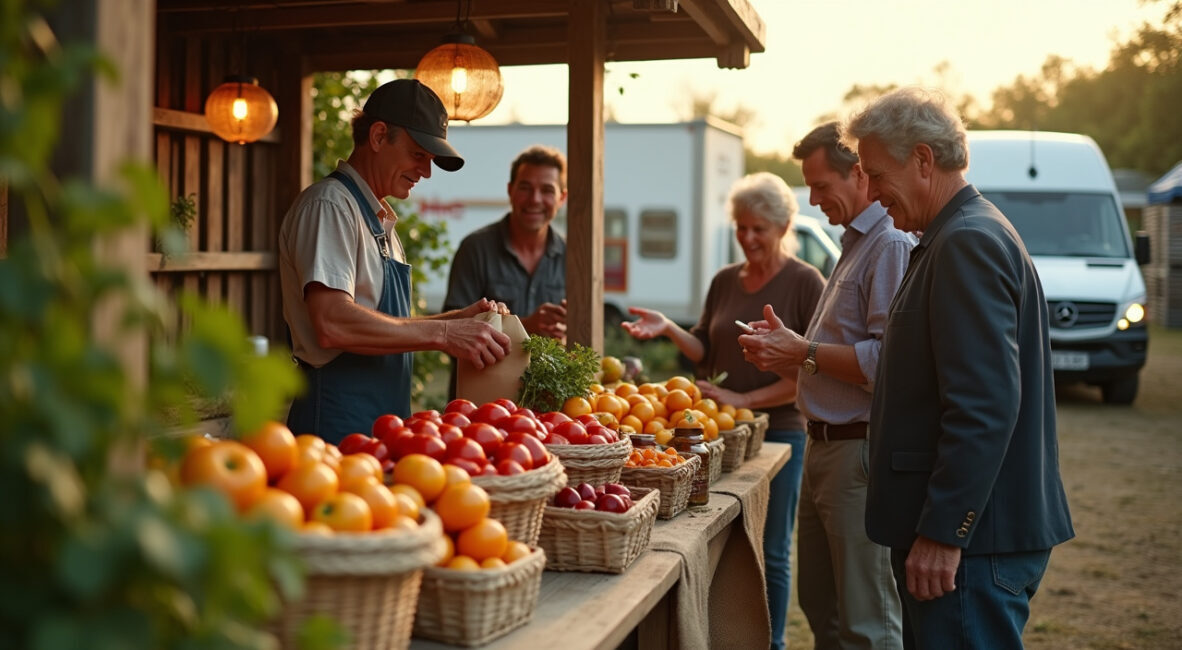
A family farming fair brings small producers and buyers together in a shared marketplace, strengthening local incomes and promoting sustainable food. Family Farming Fair events matter because they shorten supply chains, increase transparency, and help communities access fresh, seasonal products. To get started, map your producers, identify target buyers, and design simple logistics that keep sales steady.
Organizers often convert visibility into one-off sales but struggle to build repeat customers and stable revenue streams. This article explains practical steps to structure markets, manage operations, and grow loyalty so a Family Farming Fair becomes a predictable sales channel and community asset. You’ll find planning templates, logistics tips, and outreach tactics to scale impact.
Start by choosing a consistent cadence and location for your local family farmers market. A dependable schedule builds buyer habits and helps producers plan harvests and inventory. Consider a weekly or biweekly frequency tied to high-footfall days like weekends or community events.
Clarify the market’s identity—organic, mixed produce, dairy and meat, or artisanal foods—and communicate it broadly. That positioning attracts the right customers and institutions like schools or restaurants seeking supply partners.
Include rules for product traceability, labeling, and stall standards so the marketplace offers a reliable experience that reinforces trust between producers and buyers.
Recruiting producers and mapping supply
Map existing smallholders within a practical delivery radius and categorize offerings—vegetables, fruit, dairy, meat, value-added goods. A producer map reveals seasonal peaks and gaps, helping you recruit to fill demand. Use simple spreadsheets or GIS tools to visualize clusters and logistics routes.
Engage local cooperatives, extension agents, and farmer groups to find diverse suppliers. Provide onboarding materials that explain stall fees, health requirements, and expected volumes to align expectations early.
Establish minimum quality and packaging standards so buyers, including distributors and institutions, can reliably source from your Family Farming Fair each season.
Site layout and customer flow
Design a coherent site layout that guides shoppers through product zones—fresh produce, protein, pantry goods, and prepared foods—boosting cross-selling and dwell time. Clear signage and payment points reduce friction and encourage repeat visits. Think about shaded areas, seating, and accessibility for families and older adults.
Include a designated pick-up area for larger institutional or wholesale orders to streamline loading and reduce congestion. Provide handwashing stations and waste bins to maintain hygiene and curb litter problems.
Measure foot traffic and sales by zone to iteratively improve layout and vendor placement, increasing both satisfaction and average basket size over time.
Anúncios
Community Food Market: Vendor Onboarding and Rules
Creating fair vendor agreements
Set transparent vendor agreements that spell out fees, operating hours, product eligibility, and health requirements. A simple contract reduces misunderstandings and ensures vendors commit to consistent attendance. Include a clause about minimum participation or rotation policies for high-demand slots.
Offer a brief onboarding session covering signage, pricing labels, and point-of-sale options. This helps small producers present professionally and accept diverse payment types, including cash, card, or mobile money.
Provide conflict-resolution steps and a feedback loop so vendors feel supported. Clear expectations and communication improve stall retention and stabilize supply at the Family Farming Fair.
Training producers for retail success
Equip producers with basic merchandising and customer-service skills: tidy displays, clear pricing, and friendly engagement. Training can be a short workshop or one-on-one mentoring on market day. Teach simple stock rotation and packaging techniques to preserve freshness and enhance perceived value.
Introduce digital tools to track sales and inventory when feasible; many smallholders benefit from simple spreadsheets or smartphone apps. Producers who understand margins and costs price confidently and sustainably.
Encourage cooperative marketing—shared banners, group promotions, or themed market days—that increases visibility while reducing individual marketing costs for farmers.
Incentives and performance tracking
Design incentives that reward regular attendance and quality—reduced stall fees after a probation period, featured vendor spots, or access to microgrants for cold storage. Track vendor performance through simple metrics: attendance rate, average daily sales, and repeat customer counts.
Share anonymized performance insights with vendors so they can improve offerings and plan production. Transparent data builds trust and aligns producer behavior with market demand patterns.
Regular recognition—vendor of the month or customer-sourced awards—boosts morale and loyalty, helping convert marketplace visibility into steady revenue streams.
Farmers Fair Logistics: Operations and Flow
Scheduling, transport, and storage
Plan arrival windows for vendors to reduce bottlenecks and allocate unloading bays for quick transfers. A rotating schedule prevents congestion and supports larger suppliers who deliver bulk orders. Arrange basic cold storage or insulated staging areas for perishable items to maintain quality throughout market hours.
Coordinate pooled transport for smallholders who lack vehicles; group deliveries increase volume consistency and reduce individual costs. For perishable goods, time pickups to minimize spoilage and maintain product integrity.
Document SOPs for setup and teardown so volunteers and staff can execute predictable workflows. Reliable logistics make Family Farming Fair a dependable supply source for both consumers and institutional buyers.
Payment systems and POS options
Offer multiple payment methods—cash, card readers, QR payments, and vouchers—to widen customer reach. Provide a shared point-of-sale (POS) option for producers who prefer not to invest in their own devices; this reduces barriers to selling and speeds transactions.
Integrate an optional loyalty card or digital token system to track repeat purchases and enable targeted promotions. Data from sales systems can inform procurement planning and highlight best-selling items.
Ensure transparent accounting practices and quick settlement times for vendors so cash flow remains healthy, reinforcing sellers’ commitment to the Family Farming Fair model.
Waste management and sustainability
Implement composting and recycling stations to reduce landfill contributions and demonstrate environmental responsibility. Encourage vendors to use biodegradable packaging or reusable containers to lower waste and appeal to eco-conscious customers.
Partner with local composting services or community gardens to close nutrient loops and create additional community benefits. Small steps like bulk water refills or incentivizing reusable bags create positive brand perception.
Track waste tonnage and report sustainability metrics to stakeholders; measurable improvements can attract grants, partners, and institutional buyers aligned with responsible sourcing.
Anúncios
Direct-to-Consumer Market: Marketing and Customer Loyalty
Branding and local storytelling
Develop a simple brand that highlights the market’s mission: fresh, local, and family-grown. Use consistent visuals—logo, color palette, and supporter badges—to build recognition. Share farmer stories and production methods to create emotional connections that justify price premiums.
Feature producer profiles on social media and at the market with QR codes linking to recipes or farm pages. Authentic storytelling elevates perceived value and deepens loyalty from customers who want to support regional food systems.
Coordinate seasonal themes and festivals to attract new audiences while reinforcing the market’s identity as a community hub for the Family Farming Fair.
Promotions, loyalty, and repeat sales
Use targeted promotions and a simple loyalty program to turn first-time visitors into regulars. Offer a punch card, mobile rewards, or a subscription box with regular produce mixes that guarantees weekly income for producers. Repeat purchases stabilize cash flow across the season.
Leverage partnerships with local cafes and schools to offer sampler packs or co-branded promotions that reach new customers. Cross-promotions boost visibility without high advertising costs.
Collect and analyze customer feedback to refine product mixes and opening hours. Continuous improvement increases satisfaction and lifetime customer value for the Family Farming Fair.
Community engagement and partnerships
Partner with local institutions—hospitals, universities, and municipal programs—to open supply channels beyond retail shoppers. Educational events, cooking demos, and farm tours increase community investment in the market’s success and attract institutional buyers.
Work with extension services and NGOs to provide capacity-building workshops for producers and marketing support for the fair. These partnerships can unlock funding, technical assistance, and buyer introductions.
Engage volunteers and neighborhood groups to co-create market programming, turning a transactional space into a community asset and long-term support network for Family Farming Fair participants.
Wholesale Linkages: Supplying Institutions and Distributors
Building bulk supply channels
Structure minimum supply agreements and delivery windows for institutional buyers to ensure predictable volumes. Aggregate produce from multiple smallholders to meet quantity and consistency requirements for schools, restaurants, or retailers. This aggregation model transforms scattered production into scale-ready lots.
Create simple grading and packaging standards so institutions receive consistent quality. Offer sample pilot deliveries to demonstrate reliability and build buyer confidence in sourcing from smallholder networks.
Track lead times and seasonal availability to align contracts with harvest windows, reducing the risk of gaps and strengthening long-term wholesale relationships with the Family Farming Fair network.
Pricing, invoicing, and contracts
Develop transparent pricing models that cover producer costs and provide a small margin for market operations. Use simple invoice templates and agreed settlement cycles to keep cash flow predictable for both buyers and vendors. Clear contracts should define responsibilities for delivery, quality checks, and returns.
Offer tiered pricing for different buyer types—bulk discounts for weekly institutional orders and premium pricing for consumer-ready packs. Clear terms reduce negotiation friction and encourage repeat institutional contracts.
Provide buyers with sourcing documentation and traceability information to meet procurement requirements and reinforce the credibility of the Family Farming Fair supply chain.
Logistics partnerships and cold chain
Partner with local transport providers and cold-storage facilities to offer last-mile refrigerated delivery for perishable items. Shared logistics reduce costs and lower barriers for smallholders to serve larger buyers. Establish pick-up hubs for aggregated shipments to streamline operations.
Invest in simple temperature-monitoring protocols and insulated transport to maintain product safety and quality. Protocols give buyers confidence and protect producer reputations.
Document logistics costs and share them transparently with participating producers so everyone understands margins and can plan production accordingly for the Family Farming Fair’s institutional channels.
Buyer Type
Typical Volume
Lead Time
Local Restaurants
Small—weekly
2–3 days
Schools & Institutions
Medium—biweekly
5–7 days
Retailers/Co-ops
Medium—weekly
3–5 days
Market Performance: Data, Funding, and Scaling
Tracking sales and impact metrics
Collect weekly sales figures, vendor attendance, and customer counts to monitor market health. Track metrics that matter to funders and partners—producer incomes, local jobs supported, and tons of food sold. Use simple dashboards or spreadsheets to visualize trends and highlight growth areas.
Share regular performance summaries with stakeholders to build trust and attract long-term partners. Data-driven decisions help you refine operating hours, recruit vendors, and target promotions.
Measure social impact—food access improvements or farmer income increases—to support grant applications and community support for the Family Farming Fair.
Accessing grants and public programs
Explore funding from local governments, agricultural extension programs, and food-system grants to support infrastructure like cold storage, marketing, or transport co-ops. Public programs often prioritize projects that increase local food security and support smallholders.
Build proposals that emphasize measurable outcomes: job creation, increased household income, and improved fresh-food access. Partner letters from institutions can strengthen applications and demonstrate market demand.
Use seed funding to pilot innovations—online pre-orders or subscription boxes—that can later become self-sustaining revenue streams for the Family Farming Fair.
Expanding reach and replication
To scale, document operating manuals, vendor onboarding procedures, and logistics playbooks so other communities can replicate your model. Consider franchising the brand or creating a regional network that shares procurement systems and marketing resources.
Test hybrid models—fixed-site markets combined with mobile or pop-up markets—to reach underserved neighborhoods. Aggregation hubs can support multiple market sites with centralized packing and storage.
Leverage success stories and data to attract institutional buyers and investors who can accelerate replication while ensuring benefits return to family producers in each community.
Family Farming Fair models turn small-scale production into dependable income by combining clear logistics, vendor support, and buyer-focused marketing. With thoughtful planning—producer mapping, reliable schedules, and simple aggregation—markets can serve consumers and institutions consistently.
Start small, track simple metrics, and reinvest in operations that increase reliability and loyalty. Build partnerships, apply for targeted funding, and document processes so the Family Farming Fair grows sustainably. Take the next step: map your producers and pilot one monthly market this quarter.
How can I start a Family Farming Fair with limited funds?
Begin using low-cost resources: community spaces, volunteer labor, and basic signage. Focus on a pilot event to prove demand, collect data, and apply for small grants or municipal support to scale. Partnering with local NGOs helps access seed funding.
What are the necessary health and safety requirements?
Follow local food-safety regulations for produce, meat, and prepared foods. Require basic hygiene—handwashing, cold storage for perishables, and clear labeling. Coordinate inspections early to avoid disruptions and build buyer confidence.
How do I attract institutional buyers to the market?
Offer pilot deliveries, aggregated lots, and clear packaging standards. Share performance metrics and provide traceability documentation. Institutions value reliability, so demonstrate consistent volume and quality over multiple weeks.
What support do small producers need most?
Producers benefit from training in pricing, merchandising, basic record-keeping, and access to shared logistics. Simple POS options and cooperative transport reduce barriers and improve sales consistency at the Family Farming Fair.
Where can I learn best practices and funding opportunities?
Consult extension services, local agriculture departments, and nonprofit resources. International research hubs also publish guides—see resources below for authoritative links to tools and grant programs.
Edvânia Almeida. Formada em Ciências Contábeis e Pós-graduada em Gestão Financeira: Auditoria e Controladoria pela FGV. Pequena pecuarista e apaixonada pelo Agronegócio e Gestão Estratégica.
Para fornecer as melhores experiências, usamos tecnologias como cookies para armazenar e/ou acessar informações do dispositivo. O consentimento para essas tecnologias nos permitirá processar dados como comportamento de navegação ou IDs exclusivos neste site. Não consentir ou retirar o consentimento pode afetar negativamente certos recursos e funções.
Funcional
Sempre ativo
O armazenamento ou acesso técnico é estritamente necessário para a finalidade legítima de permitir a utilização de um serviço específico explicitamente solicitado pelo assinante ou utilizador, ou com a finalidade exclusiva de efetuar a transmissão de uma comunicação através de uma rede de comunicações eletrónicas.
Preferências
O armazenamento ou acesso técnico é necessário para o propósito legítimo de armazenar preferências que não são solicitadas pelo assinante ou usuário.
Estatísticas
O armazenamento ou acesso técnico que é usado exclusivamente para fins estatísticos.O armazenamento técnico ou acesso que é usado exclusivamente para fins estatísticos anônimos. Sem uma intimação, conformidade voluntária por parte de seu provedor de serviços de Internet ou registros adicionais de terceiros, as informações armazenadas ou recuperadas apenas para esse fim geralmente não podem ser usadas para identificá-lo.
Marketing
O armazenamento ou acesso técnico é necessário para criar perfis de usuário para enviar publicidade ou para rastrear o usuário em um site ou em vários sites para fins de marketing semelhantes.
 Ir para o conteúdo