Ir para o conteúdo

Brazilian agribusiness exports fell 22% in January, totaling US$10.8 billion, according to foreign trade data released this week. The decline, recorded at the start of the year, reflects weaker commodity prices and lower volumes shipped from major producing regions across Brazil.
Analysts attribute the drop to a combination of falling global demand for key commodities, seasonal logistics constraints after the harvest cycle, and a stronger real that reduced dollar-denominated receipts. The contraction threatens short-term revenue for producers and could pressure the trade balance if the trend continues in coming months.

Exports Decline 22% Year‑on‑year to US$10.8 Billion in January
Official trade statistics show agribusiness exports reached US$10.8 billion in January, down 22% from the same month last year. The reduction represents the sharpest January drop in recent cycles and contrasts with generally stronger flows in the last quarter of the previous year.
The year‑on‑year fall reflects both price and volume effects across the complex of soy, meat, sugar and corn. Market sources indicate that lower international quotations for soybeans and sugar accounted for a large share of the revenue decline, while shipping schedules and port congestion constrained volumes.
If the decrease persists through the first quarter, experts warn it could reduce foreign exchange earnings and limit fiscal room for export‑dependent municipalities. Producers and exporters now monitor February and March shipments for signs of recovery or further weakness.
Soya and Sugar Prices Down; Soy Complex Revenues Slump by Double Digits
Prices in the soy complex and global sugar markets fell in January, contributing significantly to the revenue contraction. Commodity price indices tracked by market analysts showed declines that translated into double‑digit revenue drops for soybean meal and raw sugar exports.
Brazilian exporters shipped near‑normal volumes of soybeans but received lower dollar prices, reducing the overall value of shipments. For sugar, seasonal carryover stocks and weaker demand from major buyers in Asia and Europe amplified the price effect.
This pricing dynamic shifts income from producers to consumers abroad and may influence planting and storage decisions ahead of the next harvest. Smaller margins could also squeeze credit conditions for mid‑sized producers who depend on exports for cash flow.

Meat and Poultry Shipments Down Amid Lower Global Demand and Production Timing
Meat and poultry export revenues also fell in January, reflecting weaker global demand and calendar effects tied to production cycles. Beef and poultry shipments registered lower dollar receipts even as some key markets maintained volumes, according to industry sources.
Exporters faced a mix of delayed shipments and reduced prices in major destination markets, including parts of the Middle East and Asia. Outbreak containment and sanitary inspections in some importing countries added friction to trade flows, increasing costs and delaying receipts.
The decline in animal protein exports is particularly sensitive for regional economies that rely heavily on meatpacking and related logistics. Short‑term disruptions could affect employment and slaughter rates at smaller plants, prompting closer monitoring by regulators and trade associations.
Logistics and Port Congestion Reduce Effective Shipments Despite Available Supply
Freight and port logistics weighed on export flows in January, limiting the ability to translate agricultural supply into timely sales. Congestion at key ports and limited vessel availability delayed several cargoes, pushing some shipments into subsequent months and depressing January revenue.
Road transport constraints and seasonal maintenance at grain terminals also reduced throughput in interior producing states. Exporters reported higher demurrage and storage costs, which ate into margins and discouraged spot sales under tight delivery windows.
Longer term, these logistic bottlenecks highlight structural challenges in Brazil’s supply chain, reinforcing calls for investment in modal diversification and port upgrades. Stakeholders argue that improving efficiency would help stabilize export receipts against commodity price swings.

Stronger Real Trims Dollar Earnings; Currency Appreciation Reduces Competitiveness
Currency movements played a relevant role in the revenue drop, as the Brazilian real strengthened against the dollar during the month. A firmer real lowers the dollar value of commodity receipts when converted from local currency, reducing export revenue even if quantities shipped remain stable.
Economic analysts estimated that currency effects accounted for a non‑trivial portion of the 22% decline, though exact attribution varies by product and contract currency. Exporters with sales denominated in dollars still face the downstream impact of local input costs priced in reals.
If the real maintains its appreciation, exporters may face prolonged margin compression and pressure to renegotiate contracts or seek hedging instruments. Policymakers and trade bodies will watch exchange rate dynamics for policy signals affecting competitiveness.
Regional Impacts: Midwest and South States Record Largest Revenue Losses
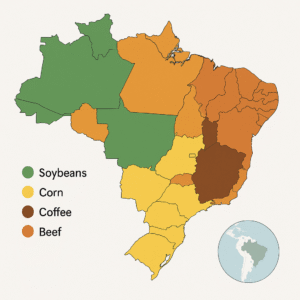
Data disaggregated by state indicate that Midwest and South producing regions bore the brunt of the January revenue decline. States with heavy soy, corn and meat production reported the largest absolute drops in export receipts compared with the previous year.
Local authorities highlighted that harvest timing and storage limitations amplified the impact in those regions, as producers grappled with both lower prices and logistical delays. Smaller municipalities that depend on export corridors faced sharper fiscal implications due to reduced tax collections and port fees.
State governments and sector associations are evaluating emergency support and investment measures to mitigate the short‑term socioeconomic effects. Longer‑term strategies include boosting storage capacity and improving transport links to reduce vulnerability to monthly volatility.
Outlook: Analysts Project Partial Recovery; Policy Focus Shifts to Diversification
Market analysts foresee a partial recovery in exports if commodity prices stabilize and logistical snarls ease in the coming months. Modest improvements in demand from key importers, combined with seasonal shipment adjustments, could lift revenue modestly in the second quarter.
However, forecasters warn that persistent global uncertainty and currency swings could prolong subdued earnings for the agribusiness sector. As a result, policymakers and industry leaders are emphasizing diversification of markets and value‑added exports to reduce exposure to commodity cycles.
Measures under discussion include incentives for processed food exports, accelerated infrastructure projects and expanded trade agreements to open new destinations. The sector’s ability to adapt will determine whether January’s 22% decline proves a temporary setback or the start of a more prolonged adjustment.