Sensors are devices that detect and measure physical signals — they monitor feed intake, weight, and behavior to reduce waste and improve herd health. Understanding low-cost sensors helps small farms cut feed costs, detect illness earlier, and make data-driven decisions. Start by comparing simple load cells, RFID feeders, and scale-based weight sensors to choose the right setup.
Feed waste and undetected health problems drain farm profits and stress animals. Low-cost, robust sensors can reduce overfeeding, identify non-eating cows, and provide actionable metrics. With modest investment, many small farms recover costs via feed savings and better herd performance.
This article explains practical sensor options, installation tips, comparative savings examples, and maintenance advice for farmers. You’ll get step-by-step guidance for load cells, RFID systems, and weight sensors plus two comparative tables and real-world numbers to help decide.
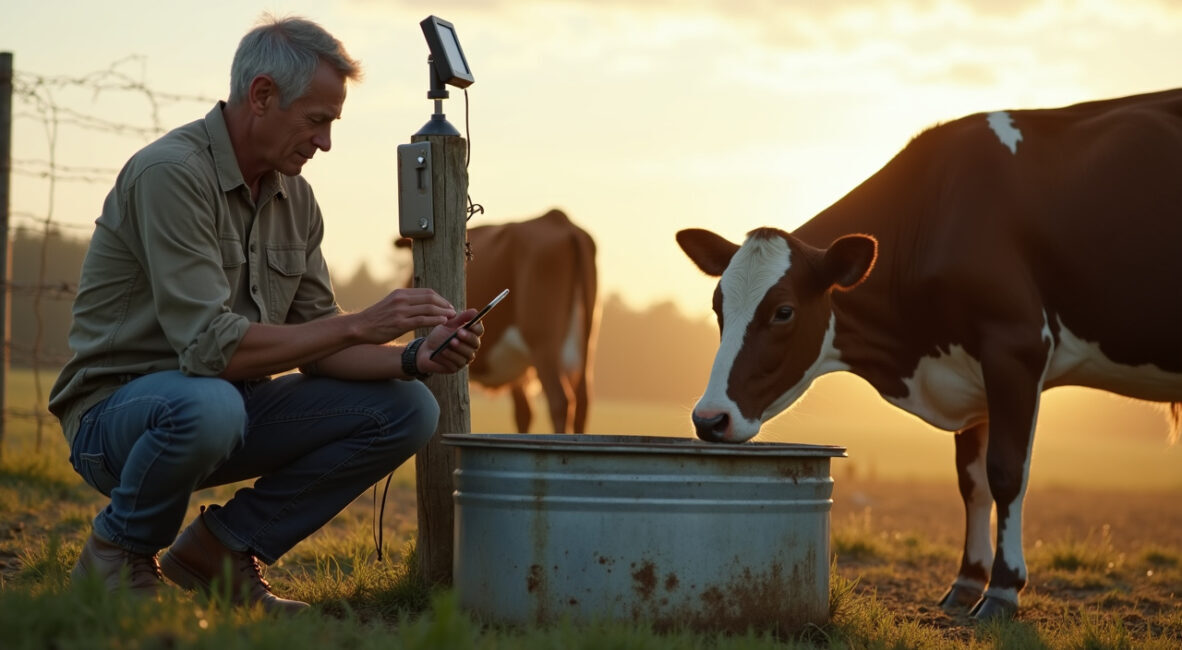
Load cells measure weight changes on a feed trough or bale feeder, offering straightforward feed-consumption data. Mounting a small load cell beneath a bunk or supplement trough reveals feed disappearance rates and allows you to spot overfeeding or waste. These sensors are inexpensive, often under $100 each, and can connect to a simple data logger or microcontroller for periodic reads that translate into daily intake trends.
Data from load cells helps detect sudden drops in consumption that may indicate illness or device malfunction. Pairing load cells with timestamps enables pattern analysis by time of day, animal group, or weather events, giving managers practical insight. For remote pastures, consider solar-powered loggers and low-power wireless to transmit readings with minimal maintenance.
Installation requires solid mounting and protection from moisture and livestock impact. Calibrate the load cell after installation with known weights and re-check calibration seasonally. Use stainless-steel or protected enclosures and route cables away from hooves and chewing to extend reliability on small farms.
Integration with Herd Management Software
Feed data from load cells can integrate with herd records to correlate intake with milk yield, weight, or veterinary events. Simple CSV exports or MQTT feeds into farm management platforms let you visualize trends and trigger alerts for anomalies. This integration unlocks higher-level decisions — culling, ration tweaks, or individual treatment — based on measured consumption rather than guesswork.
Many low-cost sensors use open protocols, making integration feasible without proprietary fees. Even basic Excel or Google Sheets dashboards provide immediate value for small operations. Choose devices with timestamped readings and clear units to simplify merging datasets and creating actionable charts.
Secure backups and basic data hygiene practices prevent loss and ensure continuity of long-term trend analysis. Keep a log of sensor maintenance and calibration events within the herd management tool to contextualize sudden shifts in the data and inform troubleshooting.
Durability and Environmental Considerations
Field sensors face mud, moisture, UV, and animal interference; choose models rated for outdoor use and protect electronics with IP-rated enclosures. Corrosion-resistant fasteners and physically isolating cables reduce failure risks. For winter climates, choose materials and adhesives that withstand freeze-thaw cycles and prevent mounting fatigue over time.
Power is critical: hardwired systems provide reliability but may be costly to run; battery or solar solutions lower installation barriers but need periodic checks. Use low-power sensors and data intervals that match your monitoring needs to extend battery life without losing actionable insights. Keep spare parts and basic tools on hand for quick repairs.
Finally, plan sensor placement to minimize animal-triggered damage: mount electronics out of reach, protect load points, and avoid trough placements where trampling concentrates loads unpredictably. Thoughtful placement reduces false readings and repair frequency, improving ROI of low-cost sensors.
Anúncios
RFID Sensors and Animal Identification
RFID Ear Tags and Reader Basics
RFID systems pair passive or active ear tags with readers at feeders or gates to identify individuals and log events. Passive tags are inexpensive and maintenance-free, while active tags provide longer range at higher cost. Readers mounted on feed bunks capture who ate, when, and how often, enabling individualized feeding profiles that reduce waste from group feeding mismatches.
RFID readers can trigger controlled feeders, portioning feed to specific animals and minimizing leftover feed. For small farms, a single reader at a supplemental feeder or treatment station yields actionable data without massive infrastructure. Data collected integrates with herd management to flag low-intake animals or unusual feeding patterns for follow-up.
Install readers at natural animal flow points and protect antennas from damage. Test read rates with tag orientations common in your herd to ensure reliable capture. Periodic audits of tag reads versus observed visits help calibrate thresholds for alerts and interventions.
Benefits for Health Monitoring and Disease Detection
Individual feeding records from RFID help spot health issues early: a cow that skips feed visits or reduces intake often precedes clinical signs. By automating detection, you reduce labor and speed treatment, improving recovery rates and lowering long-term feed waste tied to sick animals. Early detection also limits disease spread in group housing.
RFID-derived behavior patterns — frequency, duration, and time-of-day feeding — complement other biometric sensors like temperature or motion detectors for richer health indicators. Triangulating multiple sensors increases confidence and reduces false positives compared to single-sensor triggers.
Use conservative alert thresholds at first to avoid alarm fatigue, then refine based on herd baselines. Keep veterinarian and stockperson workflows in sync with alerts so that actionable items — observation, weighing, treatment — happen consistently when the system flags a concern.
Costs, Scalability, and Privacy
RFID setups scale from a single reader and a herd’s worth of passive tags to full-farm active systems with gates and automated feed control. Initial costs vary: passive tags and a reader can be low-cost (<$500 total), while active systems and integrated feeders increase capital needs. Consider phasing installations — start with high-value groups like lactating cows.
Data ownership and privacy matter if you use cloud services; choose providers that allow local data export and clear terms on data use. On-farm servers or encrypted backups offer control for sensitive herd performance metrics. Factor recurring subscription costs into ROI planning when comparing systems.
Balance cost, desired granularity, and labor savings: if a simple reader yields timely health alerts and feed savings, it may deliver faster ROI than a full automation suite. Keep expansion paths open to add load cells or weight sensors later for layered insights.
Weighing Sensors and Animal Scales
Floor Scales and Automated Weighing Gates
Weighing systems range from portable floor scales to permanent weighing gates that automatically capture weight during routine movement. Accurate weight tracking identifies growth trends, feed conversion, and illness-induced loss. Automated gates minimize handling stress and produce frequent, reliable weights to guide feeding rates and health checks without extra labor.
Portable scales work well for smaller operations with occasional weighing needs: move between pens or lactation groups to sample. Permanent scales require more upfront cost and installation but pay off via continuous monitoring, especially when tied to sorting gates or automated feeders that react to weight thresholds for rationing.
Ensure scale calibration against certified weights and protect load cells from bedding and manure build-up. Schedules for cleaning and routine bench-testing maintain accuracy and prevent drift that could mislead management decisions over time.
Using Weight Data to Optimize Rations
Combining weight trends with feed consumption lets you compute feed conversion ratios and adjust rations for efficiency. For growing stock, targeted energy and protein adjustments based on weight gain reduce wasteful overfeeding. For lactating cows, matching energy to production avoids under- or over-feeding that harms welfare and margins.
Even simple weekly weight snapshots vastly improve feed budgeting versus visual estimates. Identify outliers that consume more feed but gain less weight, signaling potential metabolic or parasitic problems. Use weight-based grouping to allocate feed types and volumes more precisely across cohorts.
Regularly revisit ration plans as weight and production change seasonally. Small changes in concentrate allocation across your herd, guided by weight data, can yield measurable savings and performance gains over a year.
Maintenance and Accuracy Concerns
Weight sensors rely on stable foundations and well-protected load cells; uneven surfaces, frozen mud, or bedding can introduce errors. Design platforms with proper drainage and solid baseplates to minimize variability. Frequent cleaning and scheduled recalibration preserve accuracy and trust in the data for management decisions.
Record calibration events and environmental notes when large discrepancies appear — heavy rainfall, recent maintenance, or animal behavior may explain anomalies. Cross-check suspicious readings with manual weigh-ins before major management actions to avoid mistakes.
Invest in ruggedized wiring and connectors and store spare load cells and junction boxes on-farm. Quick replacement minimizes downtime and keeps continuous monitoring intact, which is essential for detecting gradual trends in herd health or feed use.
Anúncios
Comparing Sensors: Load Cells, RFID, and Weight Systems
Cost-benefit Comparison Table
Sensor Type
Typical Cost
Key Benefit
Load cells
$50–$200 each
Real-time feed disappearance data
RFID systems
$0.50–$20 per tag; $300–$2,000 reader
Individual feeding records and control
Weighing scales
$500–$5,000
Accurate weight trends and automated sorting
Real Savings Examples and ROI
Concrete examples help: a 100-cow herd reducing feed waste by 5% on a $250/head annual feed cost saves $12,500 yearly. Implementing load cells at $1,000 total plus a $300 data logger can pay back in months. An RFID feeder preventing overfeeding in 20 high-producing cows saves concentrates and recoups tag/reader costs within a year in many cases.
Weighing gates that detect early weight loss can reduce veterinary bills and productivity loss; catching two illnesses earlier could save thousands in a season. Combine sensor savings (reduced feed, fewer treatments, improved milk/weight) to calculate overall ROI and justify phased investments.
When modeling ROI, include recurring costs: tags replacement, subscriptions, batteries, and maintenance. Conservative estimates often still show positive returns for targeted deployments focusing on the highest-impact groups like lactating or transition cows.
Which Sensor Fits Your Farm?
Choice depends on farm size, labor availability, and objectives. For immediate feed waste reduction, load cells on shared troughs are low-cost and high-impact. For individual health tracking and targeted feeding, RFID shines. For precise growth and sorting control, weighing systems are best. Many farms combine two or more types for layered insight and redundancy.
Start small: pilot one paddock or group, measure savings and behavior change, then scale. Use open systems supporting data export to avoid vendor lock-in and maintain flexibility as needs evolve. Simplicity often wins for small farms — choose reliable basics and add complexity only when justified by ROI.
Engage staff early: train them to interpret alerts and perform simple maintenance. The human element determines whether sensor data translates to action, so integrate new tools into daily routines and decision workflows from day one.
Installation Tips and Field Setup
Site Selection and Mounting Best Practices
Choose installation sites with consistent animal flow and minimal obstruction to ensure reliable readings. Mount sensors out of reach where possible and protect load points with guards. For load cells under bunks, provide level solid bases and a cleanable surface to prevent debris accumulation that skews readings. For RFID readers, place antennas at natural head height and consider dual antennas for better read zones.
Account for seasonal changes: water flow, manure accumulation, and ground movement can affect fixed installations. Use adjustable mounts and accessible junction boxes for easy re-leveling and servicing. Label cables clearly and route them through conduit to protect from rodents and weather.
Test the setup before full deployment: simulate animal interactions, check read rates, and ensure data logs match expected events. Early detection of placement issues saves time and cost later and improves farmer confidence in the system.
Power, Connectivity, and Data Logging
Power choices include mains, battery, and solar; pick based on site accessibility and expected maintenance cadence. For remote sensors, pair low-power devices with solar charging and optimized transmission intervals using LoRaWAN or similar low-power wide-area networks. For connected areas, Wi‑Fi or wired Ethernet provides stable data flow to local servers or cloud services.
Data loggers should timestamp each reading and provide local storage fallback for outages. Use simple protocols like MQTT or HTTP POST for cloud uploads, and ensure encryption if sending sensitive herd data. For small farms, devices that offer CSV export make offline analysis straightforward and avoid subscription traps.
Monitor battery health and connectivity with periodic automated alerts to avoid silent data loss. Implement a maintenance calendar for firmware updates and security patches to prolong device life and prevent data gaps that undermine trust in sensor readings.
Calibration, Testing, and Staff Training
Calibrate sensors during installation and re-check on a schedule: load cells with known weights, RFID readers with sample tags, and scales with certified test masses. Document calibration values and adjustments in a simple maintenance log. Testing after storms, heavy traffic, or construction ensures continued accuracy and highlights wear before failures occur.
Train staff on basic troubleshooting: cleaning sensor faces, checking connectors, and performing simple recalibration steps. Empowering on-farm personnel reduces downtime and maintenance costs. Create quick reference guides and place them near control units for easy access during busy shifts.
Finally, foster a feedback loop: review data with staff regularly, use insights to adjust workflows, and incorporate their observations into sensor placement and alert thresholds. Practical knowledge from those who handle animals daily optimizes sensor value and longevity.
Sensor Maintenance, Data Interpretation, and Optimization
Routine Maintenance Schedules
Regular maintenance includes cleaning sensor surfaces, checking cables and enclosures, and verifying power sources. Create a simple monthly checklist covering calibration, battery levels, and physical damage. Keep spare parts on hand for quick swaps and track maintenance events to correlate with data anomalies or sudden shifts in feed consumption metrics.
Seasonal checks are crucial: winter freeze protection, summer dust and flies, and wet season sealing. For battery-powered devices, log replacement dates and estimate lifecycle costs. A proactive plan minimizes unexpected downtime and ensures continuous monitoring that yields meaningful trends.
Budget a small annual allocation for consumables and replacements — this avoids deferred maintenance that erodes the ROI of even low-cost sensors. Track uptime percentages to assess system health and plan upgrades when repair frequency rises.
Related terms: calibration, uptime, preventive maintenance.
Interpreting Sensor Data for Decisions
Translate raw sensor outputs into actionable metrics like average intake per head, deviations from baseline, and feed conversion ratios. Use rolling averages to smooth noisy data and set thresholds for alerts that reflect normal herd variability. Correlate sensor trends with environmental and management events — weather, bedding changes, or feed deliveries — to avoid misattributing cause and effect.
Create simple dashboards or charts highlighting critical KPIs and historical comparisons by group. Train staff to respond to alerts with a checklist: observe, weigh, and, if needed, isolate for veterinary assessment. Consistent response protocols convert sensor alerts into timely interventions that reduce waste and improve health.
Keep seasonality in mind: intake patterns change with lactation stage and temperature. Periodic recalibration of alert thresholds maintains sensitivity while minimizing false positives that can erode confidence in the system.
Optimization: Combining Sensors for Better Results
Layering sensors — load cells at feeders, RFID for individual IDs, and periodic weighing — produces richer insight than any single device. Cross-validating data reduces false alarms and helps pinpoint the problem: a drop in trough weight without RFID reads suggests trampling or theft, while individual reduced visits with stable trough disappearance points to social competition or illness.
Optimization comes from iterative tuning: start with baseline data, set conservative alerts, and refine thresholds as you learn herd norms. Use combined data to optimize rationing schedules, group composition, and feeder design to reduce waste and improve access for lower-ranking animals.
Over time, aggregated sensor data supports strategic decisions — when to adjust rations, which groups need more supervision, and whether infrastructure upgrades (additional feeders, improved bunk design) will deliver expected savings.
Related terms: sensor fusion, data validation, cohort analysis.
Conclusion
Low-cost sensors offer practical ways for small farms to reduce feed waste and improve herd health by delivering timely, objective data. Whether using load cells to measure trough disappearance, RFID to track individual feeding, or scales to monitor weight trends, each sensor type yields specific insights that translate into savings and better animal care when paired with sensible installation and maintenance.
Start small with pilot deployments, track measurable savings, and scale systems that demonstrate clear ROI. Use the data to inform rationing, early health interventions, and labor priorities — then re-evaluate and optimize. Consider sensors as investments in better decisions: capture reliable readings, act promptly, and the herd and your bottom line will benefit.
Frequently Asked Questions
What Are the Simplest Sensors to Start with on a Small Farm?
Start with load cells under a shared trough and passive RFID tags at a single feeder to capture basic consumption and individual visits. These options are low-cost, provide clear value in feed monitoring and health alerts, and can be expanded later into integrated systems for broader herd management and ROI tracking.
How Often Should I Calibrate Load Cells and Scales?
Calibrate load cells and scales during installation, after any major disturbance, and at least quarterly for reliable accuracy. More frequent calibration may be needed in high-use or extreme environments; document each event to track drift and ensure trustworthy long-term trend analysis for management decisions.
Can These Sensors Work Without Internet Access?
Yes. Many sensors log data locally to SD cards or local servers and can operate offline; periodic uploads via a laptop or cellular hotspot are sufficient. For remote farms, consider LoRaWAN or local gateways to aggregate data while minimizing dependency on continuous internet connectivity.
What Maintenance is Required to Keep Sensors Reliable?
Routine cleaning, checking connectors, monitoring battery levels, and seasonal inspections prevent most failures. Maintain a simple checklist for calibration, firmware updates, and spare parts inventory. Quick staff training for basic troubleshooting keeps systems operational and reduces downtime.
How Quickly Can I Expect to See ROI from Sensor Investments?
ROI varies: simple load cell pilots often pay back within months through feed savings, while full RFID or automated weighing systems may take one to three years depending on herd size and feed costs. Model savings conservatively and include maintenance and subscription fees for realistic payback estimates.
Edvânia Almeida. Formada em Ciências Contábeis e Pós-graduada em Gestão Financeira: Auditoria e Controladoria pela FGV. Pequena pecuarista e apaixonada pelo Agronegócio e Gestão Estratégica.
Para fornecer as melhores experiências, usamos tecnologias como cookies para armazenar e/ou acessar informações do dispositivo. O consentimento para essas tecnologias nos permitirá processar dados como comportamento de navegação ou IDs exclusivos neste site. Não consentir ou retirar o consentimento pode afetar negativamente certos recursos e funções.
Funcional
Sempre ativo
O armazenamento ou acesso técnico é estritamente necessário para a finalidade legítima de permitir a utilização de um serviço específico explicitamente solicitado pelo assinante ou utilizador, ou com a finalidade exclusiva de efetuar a transmissão de uma comunicação através de uma rede de comunicações eletrónicas.
Preferências
O armazenamento ou acesso técnico é necessário para o propósito legítimo de armazenar preferências que não são solicitadas pelo assinante ou usuário.
Estatísticas
O armazenamento ou acesso técnico que é usado exclusivamente para fins estatísticos.O armazenamento técnico ou acesso que é usado exclusivamente para fins estatísticos anônimos. Sem uma intimação, conformidade voluntária por parte de seu provedor de serviços de Internet ou registros adicionais de terceiros, as informações armazenadas ou recuperadas apenas para esse fim geralmente não podem ser usadas para identificá-lo.
Marketing
O armazenamento ou acesso técnico é necessário para criar perfis de usuário para enviar publicidade ou para rastrear o usuário em um site ou em vários sites para fins de marketing semelhantes.
 Ir para o conteúdo