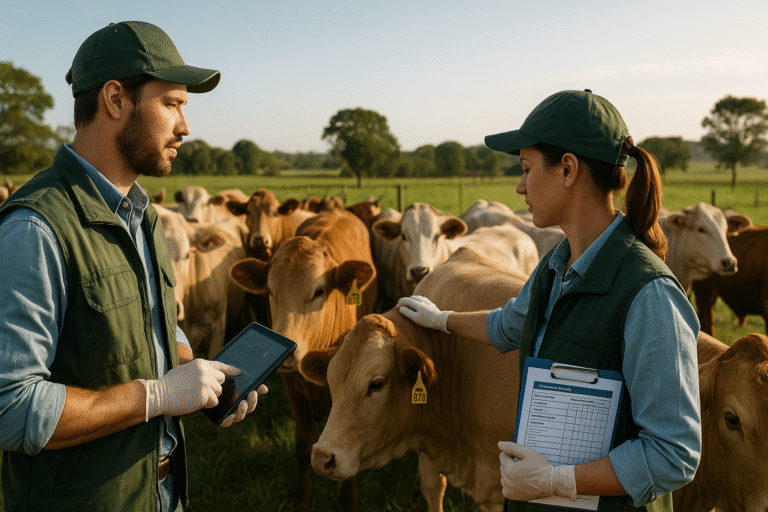
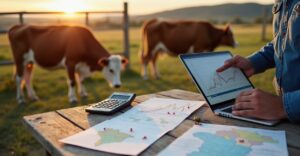
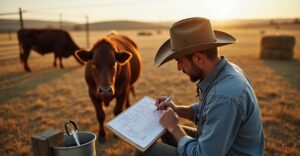
The ROI of Rotational Grazing is a practical financial assessment that helps livestock producers decide whether switching from continuous grazing to managed rotations makes economic sense. It measures upfront costs, ongoing expenses, and gains in animal performance and pasture productivity to determine payback and profitability. To start, estimate fencing, water, and labor investments, then compare those to projected increases in weight gain, stocking rate, and reduced feed purchases.
Converting pastures can mean new fencing, upgraded water systems, more active management, and training. Small and mid-sized farms especially need a clear return-on-investment plan to justify the change. This article breaks down the calculations, timelines, risk factors, and practical steps to evaluate the ROI of rotational grazing and decide if it’s a smart investment for your operation.
ROI of Rotational Grazing quantifies the financial return you expect from investing in managed grazing systems. It compares total costs—capital outlays like fencing and water infrastructure plus ongoing labor—to the benefits such as higher average daily gains, increased carrying capacity, and lower feed costs. By expressing that relationship as a percentage or payback period, producers can compare alternatives objectively.
Calculating ROI requires gathering baseline metrics: current stocking rate, average daily gain, feed purchases, and pasture productivity. Then project improvements under a rotational system, using conservative and optimistic scenarios to capture risk. This approach helps prioritize which investments (electrified fencing, wells, water lines) will produce the best returns for your herd size and goals.
Financial tools like spreadsheets or farm management software simplify sensitivity analysis, showing how changes in commodity prices or forage yields affect ROI. Use scenario planning to estimate realistic payback timelines and present-value returns, giving you a clearer picture before committing cash or labor.
Anúncios
Calculating the ROI of rotational grazing investments
Key costs and assumptions
Estimate upfront costs: fencing (temporary and permanent), water systems, cattle handling facilities, and training. Include transitional labor and potential productivity dips during implementation. Common assumptions include percent gain in carrying capacity and average daily gain improvements.
Fencing: posts, wire, or portable electric panels
Water: troughs, tanks, pumps, and piping
Labor: time for moving animals and monitoring pastures
Management: training, planning, and potential consultancy fees
Document baseline financials: current feed costs, vet costs, sale weights, and stocking density. These inputs feed into a simple ROI formula: (Net benefit ÷ Total investment) × 100. Track the assumptions and update them as you monitor results to refine ROI estimates.
Estimating benefits in weight gain and stocking rate
Rotational grazing often improves forage quality and rest periods, which can boost average daily gains (ADG) and allow higher stocking densities. Typical ADG improvements vary by region and management but can range from modest to significant. Accurately projecting these gains is crucial for reliable ROI estimates.
Use local extension studies, peer farms, and pilot paddock trials to set realistic benefit figures. Increased carrying capacity reduces the need to buy additional land or feed, translating directly into cost savings or higher revenue. Incorporate seasonal variability and drought scenarios into your projections.
Anúncios
Monitor animal performance closely during the transition; early data helps validate assumptions and adjust fence rotation timing, rest periods, and supplemental feeding strategies to maximize returns.
Simple ROI and payback calculations
A straightforward payback calculation sums all investment costs then divides them by annual net gains (reduced costs plus increased revenue). For example, if fencing and water cost $10,000 and annual net benefits are $2,000, payback is five years. Factor in maintenance and reinvestment to avoid understating costs.
Discounting future benefits to present value (NPV) gives a more complete financial picture, especially when comparing across projects or financing options. Use conservative discount rates to reflect farm risk and opportunity cost of capital. Sensitivity analysis shows which variables most affect payback time.
Record-keeping after implementation is essential: track feed purchases, weight gains, stocking density, and pasture condition to compare projected ROI with realized results and guide future management decisions.
Operational changes that affect ROI of rotational grazing
Fencing, water, and infrastructure impacts
Infrastructure decisions drive much of the ROI of rotational grazing. Permanent cross-fencing improves efficiency but costs more; portable electric fencing offers flexibility at lower capital cost. Water infrastructure—trough placement, pumps, and pipeline—determines how practical paddock rotations will be and affects labor needs.
Prioritize investments that reduce animal stress and labor per movement. For instance, centrally located water points and well-designed lanes lower handling time and improve grazing distribution. Evaluate equipment compatibility with existing machinery to avoid surprise expenses.
Phase upgrades to spread costs: start with low-cost paddocks and portable fencing, then reinvest savings into permanent infrastructure once benefits are proven. This staged approach reduces financial risk while building confidence in projected ROI.
Labor and management time considerations
Rotational grazing typically requires more active management: moving animals more frequently, monitoring forage, and adjusting paddock size. That increases labor hours, which must be monetized in ROI calculations. For family-run farms, include opportunity cost of owner time; for hired labor, include wages and training costs.
Streamline routines with scheduled moves and clear grazing plans to minimize time per movement. Tools like temporary electric reels, mobile waterers, and paddock maps reduce friction. Training and standard operating procedures shorten the learning curve and lower long-term labor costs.
Over time, improved pasture health and better weight gains can offset labor costs by reducing purchased feeds and veterinary interventions, improving the overall ROI of rotational grazing.
Animal health, welfare, and performance effects
Managed rotations can reduce parasite loads, improve hoof health, and lower stress, contributing to better average daily gains and reduced medical costs. These welfare improvements should be monetized in ROI through lower treatment costs and fewer sick animals lost to poor performance.
Monitor health indicators like body condition scores, parasite egg counts, and lameness incidence to quantify benefits. Consistent record-keeping makes it possible to attribute improvements to grazing changes rather than other inputs like genetics or feed quality.
Health gains also support market advantages—better carcass quality and animal welfare credentials—which may translate to premium prices in certain markets, enhancing ROI further.
Anúncios
Financial modeling and risk analysis for rotational grazing ROI
Building a realistic financial model
Create a spreadsheet listing all one-time and recurring costs, projected revenue increases, and cost savings. Include scenario columns—conservative, likely, and optimistic—to capture uncertainty. The ROI of rotational grazing is sensitive to forage yield, animal performance, and market prices, so stress-test those variables.
Include depreciation schedules for permanent assets like fencing and water systems, and maintenance reserves. Project cash flows annually for at least five years to estimate payback and NPV. Use break-even analysis to identify the minimum performance improvements needed for a profitable switch.
Consult with extension services, agricultural accountants, or peers to benchmark assumptions. External datasets improve credibility of projections and help secure financing when needed.
Managing risks and variability
Weather, feed markets, and animal performance introduce variability that can change ROI outcomes. Build contingency buffers into budgets and maintain flexible feeding plans. Diversifying income streams, such as selling excess forage or offering agri-tourism, can soften revenue shocks.
Insurance, emergency feed reserves, and drought-tolerant species in paddocks reduce downside risk. Monitor early indicators—pasture growth rates and body condition—to adjust stocking rates before problems compound. Adaptive management is key to protecting projected returns.
Use pilot areas to test techniques before full-scale conversion. Small-scale trials provide localized data on gains and costs, so you can refine the model and reduce the chance of costly mistakes.
Financing options and incentives
Financing infrastructure can improve cash flow and accelerate adoption. Look for low-interest agricultural loans, equipment financing, and cost-share programs from government or conservation organizations. These options lower initial cash outlay and can improve early-year ROI figures.
Some regions offer grants for water improvements or rotational grazing plans through natural-resource agencies. These incentives can materially shorten payback times and improve project NPV. Check local extension or USDA resources for current programs.
Compare loan terms and grant requirements; sometimes partial grant funding requires adherence to conservation practices, which typically align with rotational grazing goals and improve long-term pasture resilience and ROI.
Comparing systems: ROI of rotational grazing vs continuous grazing
Economic comparison of grazing systems
Comparing ROI of rotational grazing versus continuous grazing requires consistent metrics: revenue per acre, cost per gain, and labor hours. Rotational systems often show higher revenue per acre through increased stocking rates and better animal performance, but with higher upfront costs. Compute both total cost of production and revenue scenarios for a fair comparison.
Short-term cash flow might favor continuous grazing because of lower capital needs. However, multi-year horizons typically show rotational grazing outperforms in total returns through improved soil health, forage productivity, and reduced purchased feed. Present-value comparisons make those long-term benefits clear.
Regional studies and peer benchmarks help validate assumptions. Use sensitivity analysis to see at what levels of forage improvement rotational grazing becomes more profitable than continuous grazing for your specific farm.
Table: Cost and benefit comparison
Item
Continuous Grazing
Rotational Grazing
Upfront costs
Low
Moderate–High
Annual feed purchases
Higher
Lower
Stocking rate (per acre)
Lower
Higher
Case studies and benchmarks
Look for regional case studies showing realized gains and payback timelines. Many beef and sheep producers report paybacks between three and seven years depending on scale and starting conditions. Use local extension reports and peer networks to find comparable operations.
Benchmark numbers: ADG improvements, percent increase in carrying capacity, and reductions in purchased feed provide concrete targets for your model. Adjust benchmarks for climate, soil type, and forage species to get realistic expectations.
Documented case studies also highlight management practices that led to success—stocking rules, rest periods, and grazing heights—so you can replicate those elements and improve the odds of a favorable ROI.
Measuring outcomes: tracking ROI of rotational grazing over time
Key performance indicators to track
Track metrics that directly affect ROI: average daily gain, stocking rate per acre, feed costs per animal, pasture yield, and labor hours per move. Regular monitoring lets you compare projected versus actual performance and adjust management accordingly.
Establish baseline measurements before converting so changes are attributable to rotational grazing, not seasonal or market effects. Use simple record templates for on-the-go data entry to keep records current and accurate.
Review KPIs quarterly and annually to assess progress. Use results to refine fencing layouts, move frequency, and supplement strategies to maximize financial returns.
Table: Sample KPI tracking template
KPI
Baseline
Target
Average daily gain (lbs/day)
1.5
1.8–2.0
Feed cost per head ($/yr)
400
300
Stocking rate (AU/acre)
0.5
0.6–0.8
Interpreting results and adapting strategy
After collecting data, compare actual ROI to projected numbers. If outcomes lag, identify limiting factors: fencing gaps, water access, move timing, or forage species. Small adjustments often yield measurable improvements without large new investments.
Reinvest early gains into infrastructure that magnifies returns—permanent troughs, improved lanes, or better handling facilities. Keep experimenting with paddock sizes and rest durations to find the optimal balance for your land.
Share results with peers and extension agents; benchmarking your operation helps refine broader assumptions and improves ROI projections for future seasons.
Assessing the ROI of Rotational Grazing requires honest accounting of upfront costs, realistic estimates of gains in weight and carrying capacity, and attention to labor and management demands. When modeled carefully, rotational grazing often pays back within a few years through higher productivity, lower feed costs, and improved animal health.
Run a tailored financial model, start with pilot areas, and track KPIs closely to validate assumptions. If the numbers align with your goals and resources, converting pastures to rotational grazing can be a financially and ecologically rewarding investment—consider testing a phased approach and seek local incentives to improve payback.
FAQ
What is the typical payback time for rotational grazing?
Payback commonly ranges from three to seven years depending on scale, initial infrastructure needs, and realized gains in stocking rate and animal performance. Local conditions and management speed affect timelines.
Does rotational grazing always increase average daily gain?
Not always, but many producers see ADG improvements when forage quality and rest cycles are optimized. Benefits depend on forage species, stocking density, and move timing.
Are there grants or cost-share programs to help fund conversion?
Yes, many regions offer cost-share or conservation grants for water systems, fencing, or grazing plans. Check your local extension or USDA resources for current programs and eligibility.
How much more labor is required for rotational grazing?
Labor increases during implementation and routine moves, but efficiencies from good layouts and portable equipment reduce ongoing time. Monetize owner time when calculating ROI.
Can rotational grazing improve soil and pasture resilience?
Yes—properly managed rotations enhance root systems, soil organic matter, and forage diversity, increasing drought resilience and long-term productivity that contribute to ROI.
References: USDA NRCS resources, Extension publications, and regional studies available via local extension offices provide data and funding information to refine ROI estimates.
Anúncios
Teste Gratuito terminando em 00:00:00
Teste o ArtigosGPT 2.0 no seu Wordpress por 8 dias
Edvânia Almeida. Formada em Ciências Contábeis e Pós-graduada em Gestão Financeira: Auditoria e Controladoria pela FGV. Pequena pecuarista e apaixonada pelo Agronegócio e Gestão Estratégica.
Para fornecer as melhores experiências, usamos tecnologias como cookies para armazenar e/ou acessar informações do dispositivo. O consentimento para essas tecnologias nos permitirá processar dados como comportamento de navegação ou IDs exclusivos neste site. Não consentir ou retirar o consentimento pode afetar negativamente certos recursos e funções.
Funcional
Sempre ativo
O armazenamento ou acesso técnico é estritamente necessário para a finalidade legítima de permitir a utilização de um serviço específico explicitamente solicitado pelo assinante ou utilizador, ou com a finalidade exclusiva de efetuar a transmissão de uma comunicação através de uma rede de comunicações eletrónicas.
Preferências
O armazenamento ou acesso técnico é necessário para o propósito legítimo de armazenar preferências que não são solicitadas pelo assinante ou usuário.
Estatísticas
O armazenamento ou acesso técnico que é usado exclusivamente para fins estatísticos.O armazenamento técnico ou acesso que é usado exclusivamente para fins estatísticos anônimos. Sem uma intimação, conformidade voluntária por parte de seu provedor de serviços de Internet ou registros adicionais de terceiros, as informações armazenadas ou recuperadas apenas para esse fim geralmente não podem ser usadas para identificá-lo.
Marketing
O armazenamento ou acesso técnico é necessário para criar perfis de usuário para enviar publicidade ou para rastrear o usuário em um site ou em vários sites para fins de marketing semelhantes.
 Ir para o conteúdo