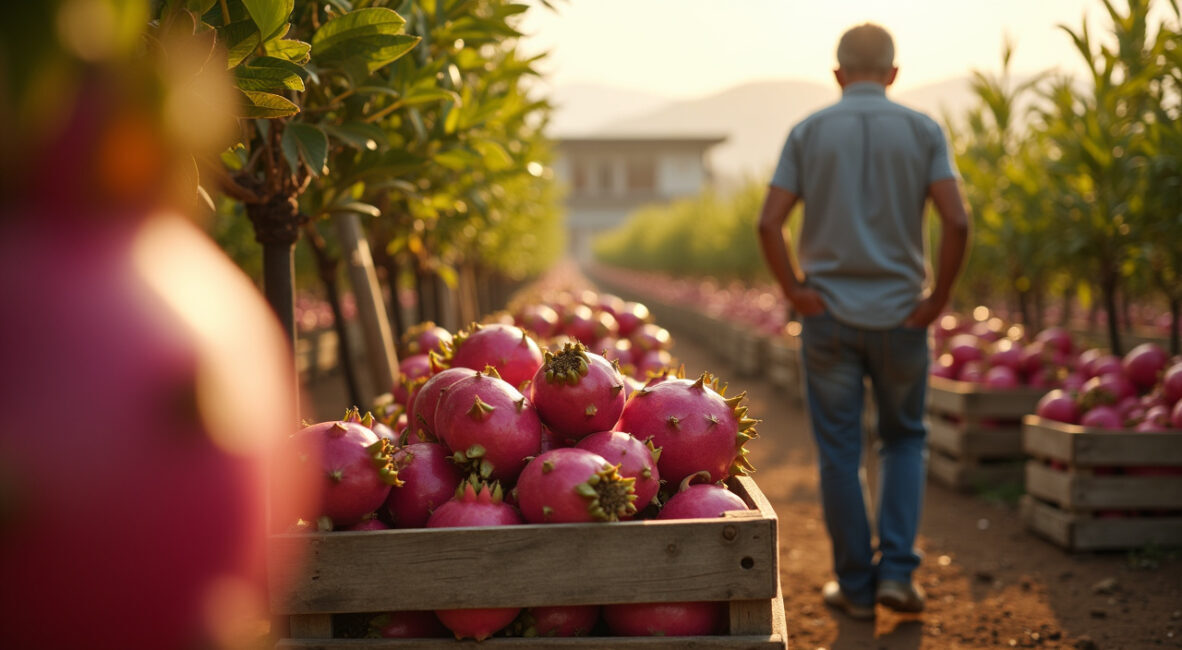
Producers in the interior of Sao Paulo report a marked expansion in pitaya cultivation in the 2026 season, driven by smallholders seeking new income streams. Farmers in municipalities such as Itatiba and Jundiaí began harvesting in February and expect higher volumes than last year.
Growers say the crop expanded due to investment in varieties and renewed market interest, but the larger supply pushed prices down sharply. The effect has increased gross volume while compressing returns per kilo, prompting producers to explore new channels and value-added processing.
Producer in Itatiba Manages 500 Plants and Expects 10 Tonnes This Season
Roberto Ferrari, a grower in Itatiba, manages about 500 pitaya plants across more than 30 varieties and forecasted a ten-ton harvest for the season. He reported that the season began roughly 20 days later than usual, but yield estimates remain about three tonnes higher than last year.
Ferrari emphasized that white and red pitaya dominate his production and that individual plants of these varieties can yield up to 20 kilograms per season. He noted that the delayed flowering did not translate into significant losses and that careful management helped keep productivity steady.
The producer also described investments in trellising and irrigation that supported consistent fruit set despite climatic variability. These practices, he said, helped offset risks associated with late floration while maintaining fruit quality for city markets.
Anúncios
Jundiaí Family Expands from 1,000 To 3,500 Plants and Targets 40 Tonnes
The Rosemberger family in Jundiaí increased pitaya plantings from 1,000 to about 3,500 plants over seven years and expects around 40 tonnes this harvest. Caíque Armagner Rosemberger estimated that this season’s output is five tonnes higher than the previous one, despite weather-related delays in flowering.
The farm focuses mainly on red and white pitaya and sends part of its harvest to São Paulo city and Rio de Janeiro markets. Rosemberger said the family relies on established distribution channels and direct sales to maintain steady demand for fresh fruit.
Expansion, he added, resulted from seeing consistent consumer interest and improved agronomic knowledge in the region. The family invested in trellis infrastructure and labor training to scale production while maintaining fruit quality for distant buyers.
Average Yield Remains About 20 Kg Per Plant; Estimated Production Gains Vary by Farm
Across the reported properties, producers estimated average yields near 20 kilograms per plant for common red and white varieties. This figure aligns with on-farm observations that well-managed plants can sustain similar productivity across varieties when irrigated and pruned properly.
Anúncios
However, yield gains varied among farms depending on plant age, technical inputs and microclimate conditions. Younger orchards and those that faced late floration reported modest delays in peak output but still projected higher season totals due to expanded area under cultivation.
Experts say that maintaining an average of 20 kilograms per plant requires consistent pest control, proper nutrition and trellis upkeep. Farms investing in these practices reported more predictable yields and fewer postharvest losses.
Anúncios
Retail Prices Fell from R$5 to R$3.50 Per Kilo in Some Regions Due to Oversupply
In Jundiaí, producers reported that the retail price of pitaya fell from roughly R$5 per kilo in the previous season to about R$3.50 this season, a drop attributable to greater supply. In Itatiba, growers sell at R$8 to R$10 per kilo, values that remain two reais higher than last year in that locality.
Market observers point out that localized price variations reflect differences in distribution costs, quality and the presence of direct sales. While some farms achieved higher per-kilo prices through niche channels, the aggregated effect of rising production exerted downward pressure on average prices.
Producers expressed concern that continued price declines could erode margins, especially for smallholders with limited access to processing or aggregation. Several farmers said they plan to diversify sales outlets to reduce dependence on spot market prices.
Supply Flows Concentrate on São Paulo and Rio De Janeiro Markets with Logistical Challenges
Producers reported that most commercialized production is destined for wholesale and retail buyers in São Paulo city and Rio de Janeiro. These metropolitan demand centers absorb large volumes but also require consistent quality and timely delivery to meet supermarket and distributor standards.
Logistical issues, such as cold-chain gaps and transport costs, affected returns for some growers who sell to distant markets. Farmers indicated that investments in postharvest handling and better coordination with transporters could reduce losses and enhance price realization.
Supply concentration also creates seasonal glut, intensifying price fluctuation during peak harvest weeks. Several producers suggested cooperatives or centralized packing facilities as potential solutions to stabilize supply and negotiate better market terms.
Varietal Diversity Reaches 30 Types on Some Properties; Red and White Remain Commercial Staples
While some farmers cultivate up to 30 pitaya varieties for research, hobby and niche markets, red and white pitayas remain the primary commercial cultivars. Producers said that diversity helps explore taste profiles and shelf life, but mainstream demand centers on the visual appeal and sweet pulp of red and white fruits.
Farmers cultivating many varieties use this diversity to target specialty buyers and gastronomic markets that value distinct colors and textures. Others maintain varietal mixtures to spread flowering windows and reduce harvest peaks, thereby smoothing labor demand.
Trials with less common varieties could open new markets for processed products, such as pulps and jams, if processors show interest. Growers noted that clearer market information about niche preferences would encourage further varietal experimentation.
Producers Pursue Processing, Direct Sales and Technical Support to Improve Margins
Facing lower spot prices, several growers said they are pursuing value-added strategies like selling processed pulp, partnering with restaurants, and direct-to-consumer sales. These moves aim to capture more of the retail margin and reduce dependence on volatile wholesale pricing.
Additionally, farmers highlighted the need for stronger technical assistance from extension services and agricultural advisors to optimize production and postharvest handling. Training in pruning, fertilization and integrated pest management can improve consistency and fruit quality.
Some producers also mentioned exploring agritourism and on-farm sales to diversify income. Industry stakeholders said coordinated efforts among growers, technicians and buyers will be key to sustaining pitaya as a viable income source for small properties.
Edvânia Almeida. Formada em Ciências Contábeis e Pós-graduada em Gestão Financeira: Auditoria e Controladoria pela FGV. Pequena pecuarista e apaixonada pelo Agronegócio e Gestão Estratégica.
Para fornecer as melhores experiências, usamos tecnologias como cookies para armazenar e/ou acessar informações do dispositivo. O consentimento para essas tecnologias nos permitirá processar dados como comportamento de navegação ou IDs exclusivos neste site. Não consentir ou retirar o consentimento pode afetar negativamente certos recursos e funções.
Funcional
Sempre ativo
O armazenamento ou acesso técnico é estritamente necessário para a finalidade legítima de permitir a utilização de um serviço específico explicitamente solicitado pelo assinante ou utilizador, ou com a finalidade exclusiva de efetuar a transmissão de uma comunicação através de uma rede de comunicações eletrónicas.
Preferências
O armazenamento ou acesso técnico é necessário para o propósito legítimo de armazenar preferências que não são solicitadas pelo assinante ou usuário.
Estatísticas
O armazenamento ou acesso técnico que é usado exclusivamente para fins estatísticos.O armazenamento técnico ou acesso que é usado exclusivamente para fins estatísticos anônimos. Sem uma intimação, conformidade voluntária por parte de seu provedor de serviços de Internet ou registros adicionais de terceiros, as informações armazenadas ou recuperadas apenas para esse fim geralmente não podem ser usadas para identificá-lo.
Marketing
O armazenamento ou acesso técnico é necessário para criar perfis de usuário para enviar publicidade ou para rastrear o usuário em um site ou em vários sites para fins de marketing semelhantes.
 Ir para o conteúdo