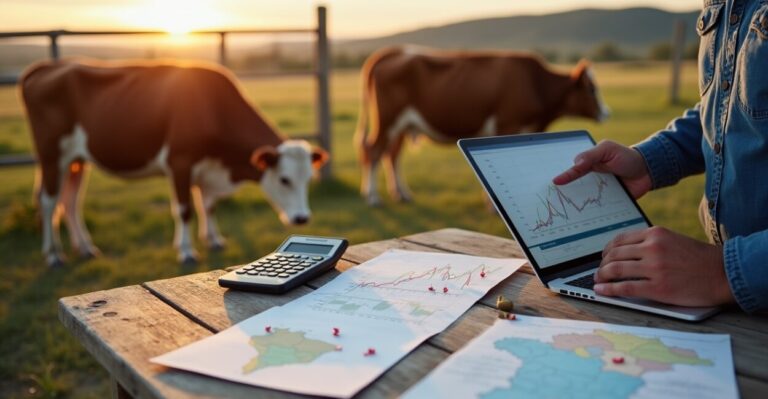
The Cattle Supply Squeeze is the urgent market condition caused by the smallest U.S. herd since 1941, driving higher beef prices and reshaping investment strategies for 2026. This squeeze matters because supply constraints plus robust demand push boxed beef and cash markets higher, creating outsized returns for strategic investors and producers.
Expectations of record per capita beef spending in 2026, elevated boxed beef prices, and growing agri-tech allocations make the Cattle Supply Squeeze both a market risk and an opportunity. Investors, ranchers, and supply-chain managers need actionable intelligence to navigate margins, input costs, and capital allocation.
This article analyzes causes, market signals, investment plays, production responses, logistics impacts, and policy implications tied to the Cattle Supply Squeeze, providing data-driven guidance for 2026 strategy.
The U.S. herd contraction to its smallest size since 1941 is central to the Cattle Supply Squeeze because fewer breeding cows mean lower future slaughter supplies. Producers cut cow numbers after droughts, feed cost spikes, and herd liquidation, creating a multi-year production gap. For markets, this tightness translates to higher futures, elevated cash bids, and pressure on boxed beef spreads, influencing packer margins and retail prices.
Beyond immediate price moves, herd dynamics affect breeding cycles, replacement rates, and genetic progress—key variables for projecting supply recovery timelines. Investors must model herd rebuilding lags against demand elasticity to forecast revenues and risk.
Supply-side constraints also interact with feed markets, export demand, and labor availability; those relationships determine the depth and duration of the Cattle Supply Squeeze and the scale of potential premiums into 2026.
Drivers: Drought, Feed Costs and Herd Liquidation
Drought remains a primary driver of the Cattle Supply Squeeze: constrained pasture reduces carrying capacity, forcing cow sales and early marketing of stockers. Elevated feed and fertilizer prices compound the issue, making retention of replacements uneconomical. Producers often opt to liquidate herds to preserve cash flow, reducing calf crops for multiple seasons.
When producers liquidate, the immediate effect is an increase in cattle available for slaughter, temporarily softening prices, but the longer-term effect is reduced future supply. That lag between liquidation and lower calf crops creates a persistent squeeze that can last several years.
Understanding these drivers helps investors evaluate timing for capital allocation into breeding stock, feedlots, or agri-tech solutions that accelerate recovery or capture premiums during the squeeze.
Anúncios
Regional Herd Patterns and Supply Geography
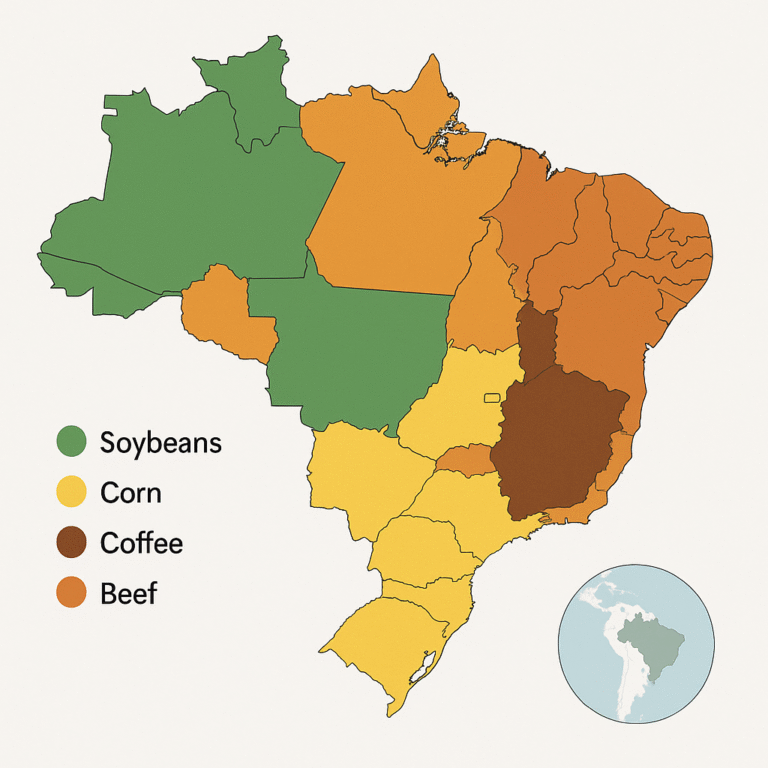
Herd reductions are not uniform: Western grazing states and parts of the Southern Plains experienced the largest cow-calf contractions due to severe drought, while some Corn Belt states retained more females. This geographic disparity shapes market flows, transport costs, and localized price spreads, affecting where packers source cattle and how basis levels move between states.
Geographic concentration of remaining capacity matters for logistics and risk: bottlenecks in processing capacity or labor constraints can amplify the Cattle Supply Squeeze in specific regions, raising localized basis and transportation premiums.
Investors and supply-chain managers should incorporate regional herd maps into models for pricing, feed procurement, and processing expansion decisions to exploit arbitrage created by uneven recovery.
Anúncios
Beef Price Signals in a Cattle Supply Squeeze
Boxed Beef Premiums and Boxed Beef Market Behavior
Boxed beef prices have trended higher as the Cattle Supply Squeeze reduces slaughter-ready cattle and tightens primal availability. Elevated boxed beef translates into stronger wholesale margins and influences retail pricing strategies. High boxed beef pushes processors to bid more aggressively in cash markets to secure cattle, creating upward pressure across the supply chain.
Traders watch boxed beef cutout values as a real-time signal of demand versus supply balance. Persistent high cutouts indicate demand is outpacing available beef, validating models forecasting record per capita spending in 2026.
For investors, boxed beef trajectories inform decisions on packer capacity expansion, cold-chain investments, and vertical integration opportunities that capture margin during prolonged squeeze conditions.
Cash Market Trends and Spot Cattle Movement
Cash markets react quickly to herd contractions; feeders and ranchers respond to packer bids, often selling at premiums when basis moves tighten. Spot cattle sales can spike when packers seek immediate slaughterable cattle, widening seasonal volatility. The Cattle Supply Squeeze increases bid-ask friction, and liquidity in cash markets becomes more valuable.
Higher cash prices accelerate herd rebuilding incentives but also raise input costs for feedlots, potentially compressing margins. Monitoring delivered prices, slide adjustments, and grid premiums is essential to understand true producer returns during the squeeze.
Capital allocators should model both spot and forward exposures, balancing immediate cash-market opportunities against long-term supply normalization scenarios.
Table: Price Indicators Comparison
Indicator
Recent Level
Implication
Boxed beef cutout
Above 5-year avg
Strong wholesale demand, higher retail prices
Live cattle futures
Elevated volatility
Market pricing-in supply uncertainty
Cash steer prices
Rising basis
Packers paying premiums to secure supply
Investment Opportunities Amid the Cattle Supply Squeeze
Private Equity and Agri-tech Plays
Genetics and reproductive technologies to accelerate herd recovery
Precision feeding systems reducing input costs
Drought-resilient forage development and seed tech
Data platforms for herd management and market analytics
Investors are targeting agri-tech innovations that shorten the time to rebuild productive herds and improve margins per animal. Seed capital and growth equity flows into genetics, reproduction (ET, AI), and nutrition technologies aim to increase calf crops and reduce replacement intervals—directly addressing drivers of the Cattle Supply Squeeze.
Private equity can also invest in processing capacity, cold storage, and logistics to capture margins created by elevated boxed beef prices and constrained supply chains.
Public Markets and Commodity Exposure
Publicly traded packers, feedlot operators, and equipment suppliers benefit from higher beef prices. Futures positions in live cattle and lean hogs offer hedging and speculative opportunities; meanwhile, equities in feed and fertilizer sectors reflect input cost exposure during herd rebuilding. Diversified investors should balance long commodity exposure with select equities that gain from elevated margins.
Macro investors can use options and structured products to limit downside if herd recovery accelerates faster than expected, reducing the duration of the Cattle Supply Squeeze.
Portfolio allocation decisions must consider correlation between beef prices and broader agricultural commodity cycles.
Risk-adjusted Strategies for 2026
Successful strategies combine near-term cash capture with longer-term structural plays: short-term arbitrage in physical cattle and boxed beef, mid-term investments in processing/logistics, and long-term bets on genetics and agri-tech. Risk management should include hedging, diversification across geographies, and scenario analysis for herd recovery timelines under variable weather and feed-cost assumptions.
Given expected record per-capita spending in 2026, investors can prioritize assets that scale quickly and lock in margins via contracting or vertical integration. Stress testing portfolios against rapid supply normalization is essential.
Allocate capital to solutions that either mitigate supply risk or secure access to cattle and beef product flows during the Cattle Supply Squeeze.
Anúncios
Supply Chain and Logistics Under the Cattle Supply Squeeze
Processing Capacity and Bottlenecks
Processing capacity limits can amplify the Cattle Supply Squeeze: when slaughter throughput is constrained by plant outages, labor shortages, or regulatory delays, packers compete for a smaller pool of finished cattle, raising premiums. Investments in automated processing lines and workforce training can relieve bottlenecks but require lead time and capital.
Bottlenecks also increase reliance on regional sourcing, which can raise transportation costs and cold-chain needs. Evaluating plant utilization rates and expansion timelines helps forecast where supply friction will persist.
Operational improvements that shorten dwell times and increase yield become valuable for capturing margin in constrained environments caused by the Cattle Supply Squeeze.
Transportation, Cold Storage, and Distribution Impacts
The Cattle Supply Squeeze raises the value of efficient transport and storage: limited primal cuts command higher prices, so minimizing spoilage and transit time preserves margins. Cold storage operators see demand for refrigerated space increase as processors hold inventory to supply retail and foodservice contracts amid variability.
Logistics innovations—dynamic routing, load-sharing, and cold-chain monitoring—reduce loss and improve responsiveness in tight markets. Investors should evaluate logistics firms that can scale capacity quickly and integrate with packers’ IT for real-time dispatching.
Distribution partners that provide flexible fulfillment across retail and foodservice channels gain competitive advantage during supply-limited periods.
Supply Contracts and Vertical Integration
Long-term supply contracts, forward pricing, and vertical integration are common responses to the Cattle Supply Squeeze. Retailers and large processors secure cattle and beef through negotiated contracts, captive feedlots, or ownership stakes in ranches to stabilize supply and margins. Vertical integration reduces exposure to spot-market volatility.
Contracts often include quality grids, slide adjustments, and indexation to boxed beef cutouts to align incentives across the chain. These contractual structures can mitigate price risk but require capital and operational oversight.
Strategic investors evaluate the trade-off between capital intensity of vertical integration and the risk premium available from capturing displaced margins during the squeeze.
Production Responses and Herd Recovery Strategies
Breeding, Genetics, and Reproductive Efficiency
Advanced AI and embryo transfer to increase conception rates
Genetic selection for fertility and feed efficiency
Protocols for reducing calving intervals and improving weaning weights
Use of genomic data for replacement heifer selection
Integration of health and nutrition plans to maximize reproductive performance
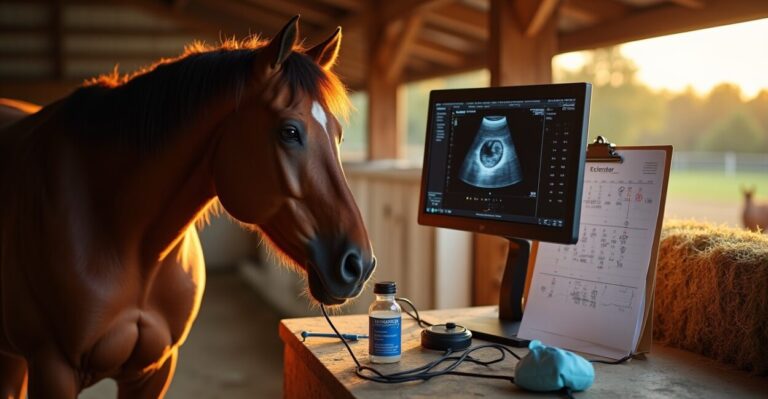
To mitigate the Cattle Supply Squeeze, producers focus on reproductive technologies and genetic improvements that raise calf crops per breeding female. Artificial insemination and embryo transfer compress the timeline to improved herd productivity, while genomic selection targets traits that increase lifetime productivity and resilience to feed cost variability.
These interventions require investment, technical expertise, and infrastructure, but they can materially accelerate herd recovery compared with passive restocking approaches.
Feed Efficiency and Ration Optimization
Feed costs influence herd retention decisions: optimizing rations and improving feed conversion rates lowers breakeven points for retaining cows and accelerating rebuilding. Nutritional strategies that incorporate ionophores, precision supplementation, and phase-feeding reduce variability and enhance average daily gain in growing cattle—helpful during the Cattle Supply Squeeze.
Feedlots that deploy real-time monitoring and precision mixing capture incremental gains that improve margins when fed cattle prices are volatile. Collaborative procurement and contracted ingredient supply can stabilize feed inputs for producers planning rebuilds.
Investors in feed manufacturing and formulation tech can benefit as producers seek efficiency gains to offset higher cattle prices during the squeeze.
Policy Incentives and Restoration Programs
Government programs that incentivize herd rebuilding—through subsidies for replacement heifers, fodder support, or drought relief—can shorten the duration of the Cattle Supply Squeeze. Understanding policy levers and likely timelines for assistance helps producers and investors anticipate changes in supply trajectory.
Regulatory clarity on animal movement, export rules, and environmental programs also impacts herd management decisions. Programs that support pasture restoration and water infrastructure are particularly effective at enabling producers to expand carrying capacity.
Monitoring proposed legislation and agency programs provides a leading indicator for herd recovery momentum and should be incorporated into investment models.
Economic and Consumer Demand Forces
Per Capita Beef Spending and Consumption Trends
Forecasts for record per capita beef spending in 2026 reflect both higher prices and resilient consumer demand. Even as retail prices rise, demand has shown elasticity limits—consumers maintain beef intake due to preferences, cultural factors, and substitution constraints in certain protein categories. The Cattle Supply Squeeze pushes up retail prices, but robust demand sustains elevated spending per person.
Demographic shifts, foodservice recovery, and premiumization of beef products (e.g., branded steaks) contribute to higher per-capita expenditure. Tracking consumer sentiment and substitution effects is essential to estimate durable demand during the squeeze.
For investors, durable demand supports premium pricing scenarios and validates investments in quality-focused supply chains and branded beef platforms.
Export Markets and Trade Dynamics
Exports amplify the Cattle Supply Squeeze impact: strong international demand diverts U.S. beef to premium foreign markets, tightening domestic availability. Trade policy, currency movements, and competitor supply conditions (e.g., Australian herd cycles) influence export volumes. When exports are robust, domestic price impacts intensify.
Investors should monitor export licensing, sanitary requirements, and bilateral agreements that can shift demand rapidly. Diversification of market channels helps processors optimize margins between domestic and international buyers.
Allocating capacity to export-compliant processing and cold-chain logistics captures higher-value orders during tight domestic supply caused by the squeeze.
Consumer Price Sensitivity and Premiumization
Higher beef prices typically lead to some substitution, but premium cuts and branded products often maintain resilience. The Cattle Supply Squeeze can accelerate premiumization as consumers trade up in taste occasions or pay for perceived quality and provenance. Retailers leverage promotions and merchandising to manage price perception while protecting margins.
Understanding elasticities by cut and channel (grocery vs. foodservice) informs product mix strategies. Producers investing in traceability and quality certification can access higher-margin segments during constrained supply periods.
Investors should weigh the long-term consumer willingness to pay for premium beef against the potential for demand erosion if prices outpace incomes.
Valuation and Strategic Recommendations for Investors
Valuation Frameworks in a Cattle Supply Squeeze
Valuation must incorporate supply-duration scenarios, discount rates that reflect agricultural cyclicality, and optionality from vertical integration. Models should include scenarios for rapid recovery, prolonged squeeze, and demand shocks. Key metrics: EBITDA per head, margin capture from boxed beef spreads, and IRR on genetics or processing investments. Sensitivity analysis to feed costs, weather, and export demand is essential for robust valuation under the Cattle Supply Squeeze.
Real options valuation helps quantify the value of capacity expansion or technology adoption that can be deployed if the squeeze persists longer than expected.
Investors should stress-test assumptions against historical cycles and current indicators, including herd inventories and boxed beef cutouts.
Due Diligence Checklist for Cattle-related Investments
Operational capacity and scalability of processing or feedlot assets
Quality and defensibility of agri-tech IP or genetic pipelines
Supply contract terms and counterparty credit
Geographic exposure to drought and regional herd constraints
Management capability in livestock operations and market cycles
Regulatory and trade compliance readiness
Logistics and cold-chain integration potential
Comprehensive due diligence during the Cattle Supply Squeeze must emphasize asset resilience to weather and supply shocks. Evaluate historical performance across cycles and verify margin capture mechanisms—how revenues align to boxed beef movements and cash market dynamics. Operational audits should include animal health protocols and feed procurement strategies.
Risk mitigation includes hedging strategies, flexible contracting, and staged capital deployment to match herd recovery timelines.
Portfolio Construction and Exit Strategies
Allocate across short-duration plays (packers, logistics), mid-duration growth (feedlots, branded beef), and long-duration transformation (genetics, reproduction tech) to balance yield and liquidity under the Cattle Supply Squeeze. Establish clear exit triggers tied to herd recovery metrics, boxed beef convergence, or valuation milestones. Secondary sales to strategic buyers (retailers, processors) are common exits once operational scaling is proven.
Maintain liquidity reserves to participate in consolidation opportunities created by distressed producers during tight supply periods. Time horizon clarity—typically 3–7 years for agri-tech and processing investments—is critical.
Design incentive structures for management to align with production and margin targets through the cycle, ensuring value realization when the squeeze resolves.
Conclusion
The Cattle Supply Squeeze—driven by the smallest U.S. herd since 1941—creates a convergent opportunity: elevated boxed beef prices, record per-capita spending projections for 2026, and strong investor interest in agri-tech. This combination favors investors who understand herd dynamics, supply-chain bottlenecks, and consumer demand resilience.
Act now with disciplined due diligence, diversified exposure across short- and long-duration plays, and structured risk management to capture outsized returns during the squeeze. Consider investments in genetics, processing capacity, and logistics to benefit from the current market imbalance and position for recovery.
FAQ
What is the Primary Cause of the Cattle Supply Squeeze?
The primary cause is a multi-year reduction in the U.S. breeding herd due to drought-driven liquidation, high feed costs, and economic pressures that led producers to cull cows. This lowers future calf crops, creating a supply shortfall that feeds into boxed beef premiums and higher retail prices, driving the squeeze.
How Long is the Herd Likely to Take to Recover?
Herd recovery typically spans multiple years because rebuilding requires retaining replacement heifers, gestation, and maturation to slaughter age. Under favorable conditions and incentives, noticeable recovery can begin within 2–4 years, but full normalization may take longer depending on weather, feed costs, and producer willingness to invest.
Which Investments Benefit Most from the Cattle Supply Squeeze?
Investments in genetics, reproductive technologies, feed efficiency solutions, processing capacity, and cold-chain logistics tend to benefit most. These assets either accelerate herd recovery or capture pricing premiums created by constrained supply. Risk-adjusted allocations across these areas can optimize returns during the squeeze.
How Does Export Demand Affect the Squeeze?
Export demand intensifies the squeeze because strong international markets divert limited U.S. beef supply to higher-paying buyers abroad, reducing domestic availability and pushing wholesale and retail prices higher. Monitoring trade flows and policy changes is crucial to anticipate shifts in domestic supply and pricing dynamics.
What Risk Management Should Producers and Investors Use?
Risk management should include forward contracting, hedging via futures and options, diversification across regions and value-chain segments, and investment in efficiency technologies. Scenario modeling for drought, feed-price spikes, and rapid demand changes helps set capital deployment and exit criteria during the Cattle Supply Squeeze.
Edvânia Almeida. Formada em Ciências Contábeis e Pós-graduada em Gestão Financeira: Auditoria e Controladoria pela FGV. Pequena pecuarista e apaixonada pelo Agronegócio e Gestão Estratégica.
Para fornecer as melhores experiências, usamos tecnologias como cookies para armazenar e/ou acessar informações do dispositivo. O consentimento para essas tecnologias nos permitirá processar dados como comportamento de navegação ou IDs exclusivos neste site. Não consentir ou retirar o consentimento pode afetar negativamente certos recursos e funções.
Funcional
Sempre ativo
O armazenamento ou acesso técnico é estritamente necessário para a finalidade legítima de permitir a utilização de um serviço específico explicitamente solicitado pelo assinante ou utilizador, ou com a finalidade exclusiva de efetuar a transmissão de uma comunicação através de uma rede de comunicações eletrónicas.
Preferências
O armazenamento ou acesso técnico é necessário para o propósito legítimo de armazenar preferências que não são solicitadas pelo assinante ou usuário.
Estatísticas
O armazenamento ou acesso técnico que é usado exclusivamente para fins estatísticos.O armazenamento técnico ou acesso que é usado exclusivamente para fins estatísticos anônimos. Sem uma intimação, conformidade voluntária por parte de seu provedor de serviços de Internet ou registros adicionais de terceiros, as informações armazenadas ou recuperadas apenas para esse fim geralmente não podem ser usadas para identificá-lo.
Marketing
O armazenamento ou acesso técnico é necessário para criar perfis de usuário para enviar publicidade ou para rastrear o usuário em um site ou em vários sites para fins de marketing semelhantes.
 Ir para o conteúdo