The mushroom business plan is the roadmap that turns spores into sustainable profit, defining market fit, production flow, and financial milestones. It matters because small-scale farms can reach profitability quickly with the right substrate, strain selection, and cost modeling. To start, map your local demand, choose efficient growing methods, and model cash flow month-by-month.
Across climates and supply chains, growers face constraints: capital limits, crop cycles, and perishability. This article frames that conflict as a narrative—how a small farm overcomes resource scarcity and market friction to scale. We’ll walk through market research, financing options, substrate strategy, production schedules, risk management, and a 12-month financial projection designed to reach profitability within a year.
Follow this practical, story-driven framework to build a mushroom business plan that balances technical detail and business rigor, optimized for small-scale farms aiming for fast, repeatable success.
The hero begins by listening: market research frames why consumers will pay for your mushrooms. Start with direct-market channels—farmers markets, restaurants, CSAs—and survey chefs and consumers for price sensitivity, preferred varieties, and freshness windows. Competitive analysis reveals gaps: specialty gourmet fungi, medicinal strains, or convenient pre-packaged mixes. By mapping customer segments, you prioritize crops, packaging, and distribution, aligning production calendars to peak demand windows and avoiding spoilage.
Use demographic and seasonal insights to forecast weekly sales, unit economics, and shelf life requirements. This reduces waste and tightens your revenue model. Understanding the retail and foodservice buyer’s needs becomes the protagonist’s compass, guiding strain selection and branding choices.
Implement small experiments—pop-up stalls or pilot deliveries—to validate assumptions quickly. These micro-tests lower business risk and provide real sales data for your mushroom business plan, improving projections and investor conversations.
Competitive Landscape and Pricing Strategy
Identify incumbents: local growers, wholesalers, and imported products. Compare price per pound, packaging formats, and freshness guarantees to position your farm competitively. Calculate target margins factoring in post-harvest losses and distribution fees. Pricing strategy can be premium (rare gourmet strains), value (common oyster varieties with volume sales), or hybrid (subscription boxes plus wholesale contracts). Choose a path that aligns with production capacity and customer acquisition costs.
Model different channels—direct-to-consumer, restaurants, and retailers—estimating accepted wholesale discounts and shelf-life premiums. This multi-channel pricing grid is essential in your mushroom business plan to forecast revenue and required production volumes for breakeven.
Document seasonal price fluctuations and build buffers into your plan. A resilient pricing strategy leverages brand trust, freshness guarantees, and unique strain offerings to maintain margins during low-season periods.
Collect quantitative data: local food hub reports, regional agricultural extensions, and hospitality industry indices. Use online tools like search trend analyses and social listening to gauge interest in specialty mushrooms. Combine this with qualitative interviews of chefs and grocers to understand ordering cycles and quality expectations. These inputs form the backbone of a realistic sales forecast in your mushroom business plan.
Track regulatory requirements—food safety certifications and labeling laws—through extension services and food safety authorities. Incorporating compliance timelines prevents costly delays and builds trust with wholesale buyers who require traceability and sanitation records.
Reference authoritative sources to validate assumptions and attract partners: agricultural extension services, university research on fungal cultivation, and market reports. These citations strengthen your plan and support financing conversations with lenders or investors.
Anúncios
Production Planning in a Mushroom Business Plan
Choosing Substrate, Strain, and Cultivation Method
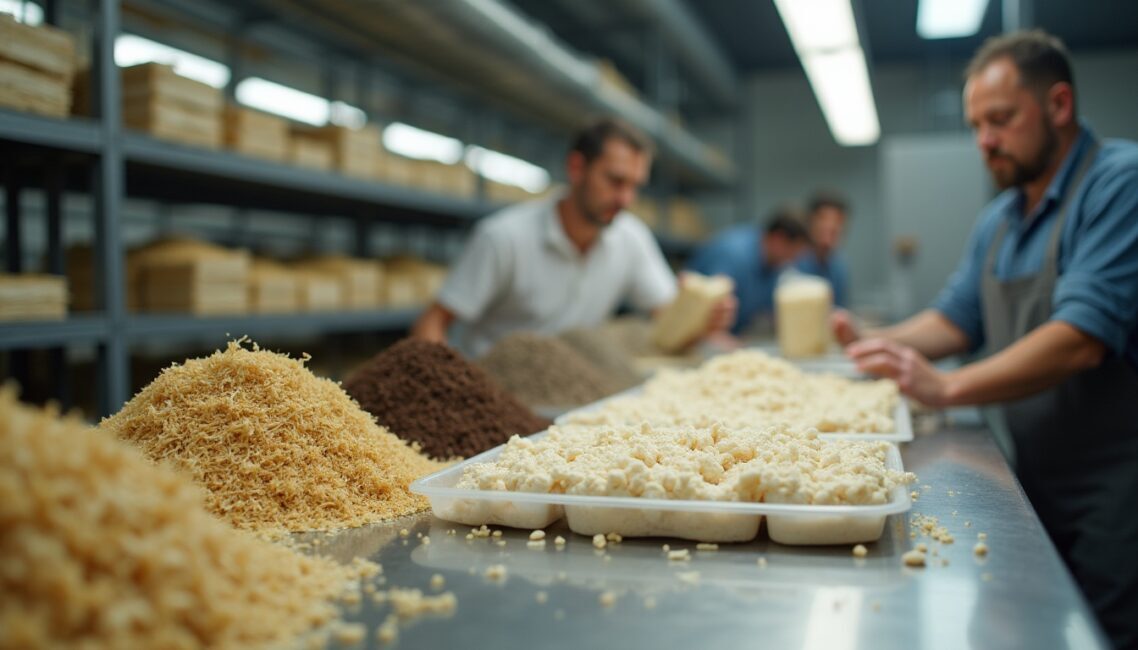
Select substrate: sawdust, straw, coffee grounds, or supplemented hardwood mix
Match strain to environment: oyster for low-tech, shiitake for longer logs
Assess yield per kg substrate and colonization time
Decide on indoor shelves, bags, tubs, or log systems
Substrate and strain choices define yield curves and labor intensity. Opt for strains with predictable fruiting and disease resistance for reliable weekly harvests. Substrates influence capital costs: sawdust blocks require sterilization or pasteurization equipment, while straw can be pasteurized on-farm. These trade-offs appear as line items in the operations section of your mushroom business plan.
Choose a cultivation method fitting your scale: low-tech outdoor logs for minimal investment, or controlled-environment bag systems for predictable cycles. Each method affects water use, energy consumption, and labor scheduling—critical inputs for cost modeling and production cadence.
Facility Layout, Equipment, and Workflows
Design a facility with separate zones: substrate prep, inoculation, incubation, fruiting, and post-harvest packing. Flow minimizes contamination risk and reduces labor motion waste. Standardize sanitation protocols and record-keeping for batch traceability—valuable for wholesale buyers and certification processes. Estimate equipment needs: sterilizers, humidity control, shelving, and refrigeration for post-harvest handling.
Map daily and weekly workflows to calculate labor hours per harvest cycle. Efficient layout and simple fixtures can lower labor costs and increase throughput, reflected in your mushroom business plan’s operating expense projections. Consider modular designs that scale as demand grows.
Plan for peak harvest handling to avoid bottlenecks: temporary packing stations and cold-chain solutions ensure product quality. These operational details convert theoretical yields into saleable inventory and reliable revenue streams.
Production Schedule and Yield Forecasting
Create a rolling 12-week production calendar tied to strains’ colonization and fruiting timelines. Forecast yields per batch, expected losses, and usable harvest dates. Scheduling multiple staggered cohorts—overlapping inoculation and fruiting cycles—creates a continuous harvest that matches market cadence for restaurants and markets. Accurate scheduling is the protagonist’s rhythm, ensuring steady cash flow in your mushroom business plan.
Incorporate contingency windows for contamination or equipment downtime. Track real yields to refine forecasts and adjust substrate mix or strain choices as you gather operational data. These iterative improvements reduce variance and improve profitability.
Connect production forecasts to inventory and distribution planning, ensuring that packing and delivery capacity align with expected harvest peaks. This integration prevents waste and maximizes revenue per harvest cycle.
Cost Modeling for a Mushroom Business Plan
Startup Capital and Fixed Costs Breakdown
List initial capital expenditures: facility upgrades, sterilization/autoclave units, shelving, climate control, refrigerators, and initial spawn and substrate inventory. Calculate one-time costs versus depreciable assets and include contingency funds for unforeseen repairs. Fixed costs also include lease, insurance, utilities baseline, and licensing fees. Accurate startup costs determine how much financing you’ll need and shape the timeline to profitability in your mushroom business plan.
Distinguish between essential and optional investments; start with a minimal viable facility and upgrade as revenue grows. Prioritize equipment with high uptime and low maintenance. This conservative capex approach reduces risk for small-scale farms with limited access to credit.
Document assumptions and quotes from suppliers to show lenders or partners you’ve validated costs. Transparency in cost modeling builds credibility and speeds financing decisions.
Variable Costs, Unit Economics, and Break-even Analysis
Calculate per-unit costs: substrate per bag, spawn cost, utilities per cycle, labor hours per kg, packaging, and delivery. Combine this into a cost-per-pound metric to compare against target selling prices across channels. Use break-even analysis to determine required weekly volumes and pricing strategies to achieve profitability within 12 months. Small changes in yield or price can materially shift months-to-profit, so sensitivity analysis is essential in your mushroom business plan.
Model scenarios—conservative, expected, and optimistic—with revised yields and market prices. These scenarios help you plan for slow seasons and identify when to scale production or adjust sales channels.
Track key performance indicators: yield/kg substrate, labor cost per harvest, and spoilage rates. Monitoring these metrics tightens control over variable costs and supports continuous improvement in operations.
12-month Financial Projection Sample
Month
Revenue ($)
Net Cash Flow ($)
1
1,200
-3,800
3
3,600
-1,200
6
7,500
1,800
9
9,800
4,600
12
12,500
8,200
This illustrative projection assumes staggered cohorts, increasing market penetration, and stable margins. Early months absorb capex and setup costs; by month six, volume and channel mix shift results positive. Use your own input variables—local prices, labor rates, and yield data—to customize the projection in your mushroom business plan.
Include a cash reserve and plan for seasonal dips. The projection should be updated monthly using actual sales and yield data to keep strategies aligned with reality and quickly adapt to market feedback.
Anúncios
Financing and Business Model Options for Mushroom Business Plan
Bootstrapping Vs. Seeking Investors or Loans
Bootstrapping offers control and slower, organic growth—ideal for operators with existing land or equipment. Loans and investor capital accelerate expansion but require clear ROI timelines and often equity. Compare interest rates, payback periods, and investor expectations. A hybrid approach—initial bootstrap to prove concept, then seek financing for scale—balances risk and growth. Your mushroom business plan must demonstrate clear unit economics to attract external capital.
Lenders prefer collateral and cash-flow forecasts; investors look for scalable models and defensible market position. Prepare pitch materials: concise summaries, production data, and validated sales channels. These demonstrate traction and reduce perceived risk for financiers.
Consider community-based financing like CSA prepayments or local food hub partnerships that provide working capital without diluting ownership. These arrangements often form part of a resilient small-farm financing strategy.
Grants, Subsidies, and Alternative Funding Sources
Search for agricultural grants, small business programs, and sustainability subsidies through local government, extension services, and non-profits. Specialty crop or value-added agriculture grants can subsidize equipment or training. Crowdfunding campaigns showcasing your farm story and environmental benefits can raise pre-sales and community support. Each funding source has reporting requirements—factor administrative burden into your plan.
Track application cycles and eligibility to align funding with capital needs. Grants can reduce upfront capital but rarely cover operating gaps, so combine sources intelligently within your mushroom business plan. Demonstrate community benefit and sustainability to increase grant competitiveness.
Look for partnerships with food hubs or local distributors who may offer consignment arrangements or low-interest loans. Creative funding reduces dilution and maintains operational control while supporting growth.
Revenue Models and Diversification Strategies
Beyond fresh mushroom sales, diversify with value-added products: dried mushrooms, tinctures, spawn sales, workshops, and agritourism. Each revenue stream smooths seasonality and increases lifetime customer value. Build margins by processing lower-grade fruit into shelf-stable products rather than discarding them. Clear revenue mix scenarios help investors and lenders understand resilience of your mushroom business plan.
Subscription boxes and wholesale contracts provide predictable revenue; retail and farmers market sales offer higher margins but variable volume. Balance channels to optimize cash flow and margin targets. Document sales funnel conversion rates and customer acquisition costs for each model.
Invest in brand and packaging that communicates freshness and quality. Strong branding increases price elasticity, enabling premium pricing for specialty strains and processed goods.
Quality Control and Risk Management in Mushroom Business Plan
Biosecurity, Contamination Control, and Sanitation
Contamination is the antagonist in our story; strict biosecurity protocols protect yields and reputation. Implement controlled-access inoculation zones, HEPA-filtered incubation rooms where feasible, and detailed sanitation SOPs. Train staff on glove use, material handling, and record-keeping for each batch. Rapid identification and isolation of contaminated batches minimizes losses and preserves customer trust—vital elements in your mushroom business plan.
Regular environmental monitoring and test runs for new substrates or spawn sources prevent systemic issues. Keep supply chain redundancy for spawn sources to avoid interruptions and validate suppliers with quality checks.
Document corrective actions and continuous improvement measures to show buyers and regulators you maintain high standards. These practices often become selling points for foodservice clients demanding traceability and safety certifications.
Insurance, Legal Compliance, and Food Safety
Secure appropriate insurance: product liability, property, and business interruption. Understand local food handling and selling regulations, required permits, and potential certifications (e.g., GAP, HACCP). Compliance reduces legal risk and opens doors to larger institutional buyers. Build a compliance calendar into your operations to track renewals and inspections as part of your mushroom business plan.
Consult local extension services and food safety authorities for tailored guidance. Documentation and proactive compliance reduce friction during partnership negotiations and help secure financing by demonstrating risk mitigation.
Plan recalls and customer communication strategies to minimize reputational damage. Preparedness is a competitive advantage that reassures buyers and supports premium positioning.
Supply Chain and Seasonal Risk Mitigation
Seasonal variations and input shortages threaten continuity. Mitigate risk by diversifying substrate suppliers, storing key inputs, and maintaining inventory buffers. Establish flexible scheduling and backup crop plans to shift between strains or channels if a market softens. Use contracts with restaurants or retailers to secure baseline demand and finance working capital.
Monitor climate and utility dependencies—humidity and temperature control are critical. Have contingency plans for power outages and equipment failure, including emergency generators or alternative growing methods. Risk-reduction measures should be quantified in your mushroom business plan to show resilience to stakeholders.
Regularly revisit risk assessments and update mitigation steps based on operational data. This adaptive approach keeps your business agile and better equipped for unforeseen shocks.
Marketing and Distribution Strategy for Mushroom Business Plan
Branding, Storytelling, and Positioning
Craft a narrative that connects your farm’s origin, sustainability practices, and quality standards to customer values. Use vivid storytelling—imagery of humidity-slick shelves at dawn, careful hand-harvest, and community recipes—to build emotional affinity. A strong brand allows premium pricing and repeat customers. Positioning informs packaging, labeling, and the sales pitch for restaurants and specialty grocers included in your mushroom business plan.
Differentiate through origin transparency: batch numbers, harvest dates, and recommended uses. Education content—recipes, storage tips, and chef endorsements—creates demand and reduces friction for new buyers. Visual identity and clear messaging amplify your market presence.
Leverage local partnerships and events to build credibility, and capture customer feedback for continuous product refinement. Repeatable marketing frameworks convert story into sales and strengthen your revenue model.
Logistics, Cold Chain, and Delivery Models
Design logistics around perishability: short routes, insulated packaging, and timely pickups. For short distances, refrigerated delivery or cool boxes maintain quality; for broader reach, partner with refrigerated carriers. Efficient routing reduces delivery time and cost per order. Document delivery SOPs and expected shelf life for each channel in your mushroom business plan to align customer expectations with operational capacity.
Offer tiered delivery options: same-day to restaurants, next-day to retailers, and scheduled pickups for CSAs. Pricing should reflect service level and logistics cost. Invest in route optimization tools or local distributors to scale deliveries cost-effectively.
Track delivery KPIs—on-time rate, product temperature at delivery, and customer complaints—to continuously improve logistics and preserve margins.
Sales Channels and Partnerships
Pursue a mix of direct sales, wholesale contracts with restaurants and grocers, and digital channels like subscription boxes or online ordering. Partnerships with local grocers, co-ops, and food hubs expand reach with minimal marketing spend. Negotiate terms that reflect your production cadence and payment cycles to manage cash flow effectively within your mushroom business plan.
Develop a simple wholesale packet with pricing tiers, minimums, and delivery schedules. Provide chefs with sample packs and culinary sheets to encourage trial. Long-term contracts reduce sales volatility and support financing conversations.
Integrate feedback loops from partners to refine product size, packaging, and seasonal offerings—this iterative collaboration strengthens relationships and stabilizes revenue.
Scaling and Exit Strategies in a Mushroom Business Plan
When and How to Scale Operations
Scale when demand consistently exceeds capacity and unit economics improve with volume. Indicators include repeat orders, stable margins, and reliable supply chains. Plan modular expansion—add racks, sterilizers, or shifts—instead of fully rebuilding facilities. Phased investments lower risk and speed time-to-market. Scaling decisions should be justified in your mushroom business plan by concrete KPIs and projected ROI.
Prepare standardized training, documented SOPs, and quality checks to preserve product consistency as headcount grows. Consider automation for substrate handling or packaging to reduce labor intensity per unit as you scale.
Prioritize channels with higher margin-to-effort ratios when allocating growth capital. Maintain a contingency fund for rapid adjustments if market conditions change during scaling phases.
Acquisition, Partnerships, and Joint Ventures
Growth via partnerships—co-packing agreements, joint marketing with complementary producers, or strategic acquisitions—can accelerate market share. Identify targets that bring distribution, processing capacity, or brand equity. Structure deals to align incentives and protect operational control, especially in early-stage farms. These options should be explored in the strategic section of your mushroom business plan as alternative growth paths.
Perform due diligence on partners’ quality systems and customer base to ensure cultural and operational fit. Successful partnerships can open new channels and stabilize revenue without heavy capex.
Consider earn-outs or staged acquisitions to reduce upfront risk. Maintain clear exit metrics to measure success against acquisition or merger criteria.
Even if you intend to run the farm long-term, define exit options: sale to a strategic acquirer, transfer to family, or conversion to a food hub. Valuation depends on recurring revenue, margin stability, documented systems, and asset value. Build consistent financial records and operational KPIs to maximize valuation. Your mushroom business plan should include a realistic valuation approach to guide strategic decisions.
Strengthen intangible assets—brand recognition, wholesale relationships, and proprietary strains—since these often command premium valuations. Prepare an exit timeline and milestones that increase farm attractiveness to buyers or successors.
Regularly update valuation models and maintain transparent governance and financial statements to facilitate smoother transitions when the time comes.
Conclusion
Building a mushroom business plan turns a passionate grower into a profitable entrepreneur by combining market insight, disciplined production planning, and rigorous cost modeling. Focused choices—substrate, strain, and sales channels—plus conservative financial projections and risk mitigation create a path to profitability within a year for many small-scale farms.
Use this storytelling framework to craft your plan, validate assumptions with real sales, and iterate monthly. Commit to measurement, maintain quality, and pursue channels that reward your farm’s unique strengths. Start small, plan smart, and grow deliberately—then revisit your mushroom business plan as both a roadmap and a living document guiding every harvest.
Frequently Asked Questions
What Startup Capital is Needed to Begin a Small Mushroom Farm?
Startup capital varies by method: low-tech log cultivation can begin under $5,000 while controlled indoor bag systems typically require $15,000–$50,000 for equipment and facility upgrades. Costs include sterilization or pasteurization equipment, shelving, spawn, substrate, refrigeration, and initial utilities. Budget for working capital to cover the first 3–6 months of operations, accounting for slower early sales. Include contingency for contamination losses and equipment repairs. Detailed quotes and phased investment plans reduce surprises and improve financing outcomes.
How Long Until a Mushroom Farm Becomes Profitable?
Profitability often occurs within 6–12 months for small-scale farms that manage costs, secure early buyers, and run staggered production cycles. Key drivers are yield per substrate unit, labor efficiency, and reliable sales channels like restaurants or subscription customers. Initial months absorb capital expenditures and setup; by month six, steady cohorts and repeat customers can push net cash flow positive. Regular tracking of KPIs and quick adaptation to market feedback shorten the path to profitability.
What Strains and Substrates Offer the Best Returns for Beginners?
Oyster mushrooms and king oyster varieties suit beginners due to fast colonization, forgiving contamination tolerance, and strong market demand. Substrates like pasteurized straw or supplemented sawdust provide solid yields with manageable equipment needs. Shiitake on hardwood logs produces high-value product but requires longer timelines. Choose strains that match your facility’s sanitation level and local market preferences; higher yields and reliable fruiting cycles improve unit economics and speed ROI.
Which Sales Channels Are Most Effective for Small Producers?
Direct-to-consumer (farmers markets, CSAs) and restaurant sales are highly effective for small producers, offering strong margins and direct feedback loops. Wholesale to specialty grocers provides volume but requires consistent quality and predictable supply. Subscription boxes generate recurring revenue and customer loyalty. Combining channels diversifies risk; prioritize those that align with your production cadence and margin goals while building long-term relationships that stabilize demand.
How Can I Reduce Contamination and Crop Losses?
Reduce contamination through strict sanitation protocols: segregated inoculation and incubation zones, clean workflow practices, and quality spawn suppliers. Use pasteurization or sterilization appropriate to your substrate, and monitor environmental parameters like humidity and temperature closely. Rapidly isolate and discard contaminated batches to protect remaining stock. Regular staff training, documented SOPs, and environmental monitoring are essential investments that preserve yields and reputation.
Edvânia Almeida. Formada em Ciências Contábeis e Pós-graduada em Gestão Financeira: Auditoria e Controladoria pela FGV. Pequena pecuarista e apaixonada pelo Agronegócio e Gestão Estratégica.
Para fornecer as melhores experiências, usamos tecnologias como cookies para armazenar e/ou acessar informações do dispositivo. O consentimento para essas tecnologias nos permitirá processar dados como comportamento de navegação ou IDs exclusivos neste site. Não consentir ou retirar o consentimento pode afetar negativamente certos recursos e funções.
Funcional
Sempre ativo
O armazenamento ou acesso técnico é estritamente necessário para a finalidade legítima de permitir a utilização de um serviço específico explicitamente solicitado pelo assinante ou utilizador, ou com a finalidade exclusiva de efetuar a transmissão de uma comunicação através de uma rede de comunicações eletrónicas.
Preferências
O armazenamento ou acesso técnico é necessário para o propósito legítimo de armazenar preferências que não são solicitadas pelo assinante ou usuário.
Estatísticas
O armazenamento ou acesso técnico que é usado exclusivamente para fins estatísticos.O armazenamento técnico ou acesso que é usado exclusivamente para fins estatísticos anônimos. Sem uma intimação, conformidade voluntária por parte de seu provedor de serviços de Internet ou registros adicionais de terceiros, as informações armazenadas ou recuperadas apenas para esse fim geralmente não podem ser usadas para identificá-lo.
Marketing
O armazenamento ou acesso técnico é necessário para criar perfis de usuário para enviar publicidade ou para rastrear o usuário em um site ou em vários sites para fins de marketing semelhantes.
 Ir para o conteúdo